What Is Plangud? Meaning, Uses, History, and Why the Word Can Be Confusing
If you searched for “plangud,” you may have noticed that the word does not have one clear meaning in English-language search results. Some websites use similar terms when discussing planning, productivity, or digital platforms. However, the established linguistic meaning of plangud is different.
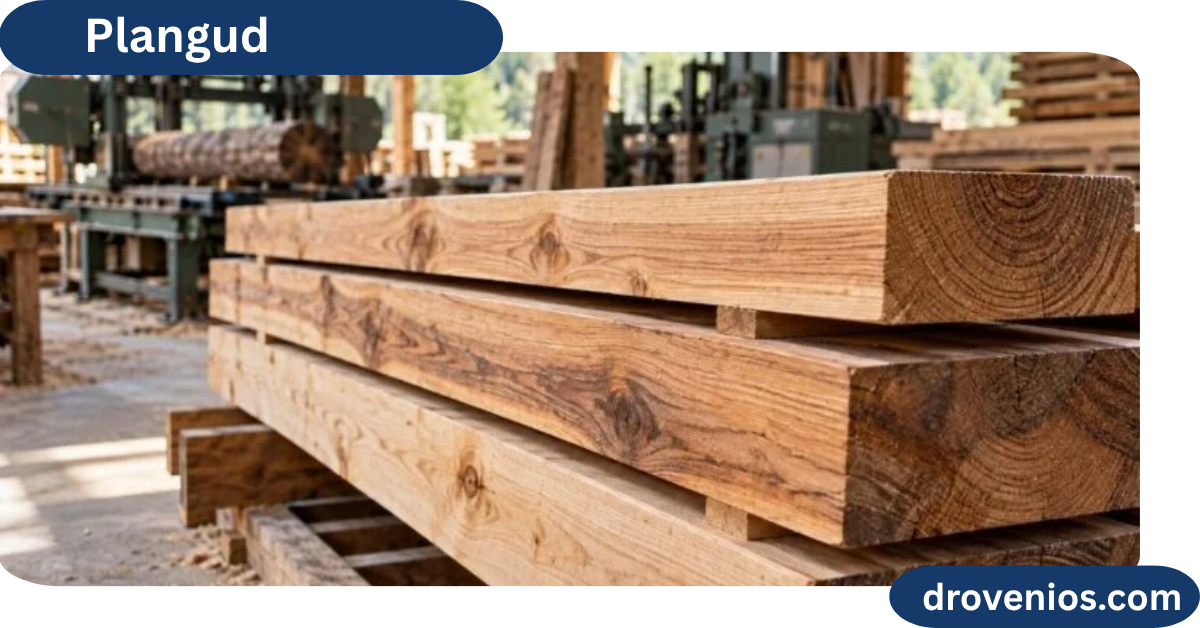
In Estonian, plangud is the plural form of plank, a word referring to thick wooden boards or planks. The Estonian Language Institute’s current dictionary lists plank as a board sawn from a thick tree trunk and gives plangud as one of its grammatical forms.
This distinction is important for anyone researching the keyword. Search engines can show pages that use “Plangud” as a modern brand, invented term, or planning-related label, but that does not make those interpretations the established dictionary meaning.
This guide explains what plangud means, where it comes from, how it is used, how it differs from plank, and why online information about the term can be confusing.
What Does Plangud Mean?
Plangud is an Estonian plural form of the word plank. In its main established meaning, it refers to wooden planks or thick boards.
The Estonian Language Institute’s EKI Combined Dictionary defines plank as a board sawn from a thick tree trunk, approximately 5–10 centimeters thick and broad. The dictionary specifically lists plank → plangud among the word forms.
In simple English, you can understand it as:
plank = a thick wooden board
plangud = planks or thick wooden boards
The exact English translation can depend on the sentence because Estonian grammar changes word forms according to number and grammatical case.

For an English-speaking reader, the easiest way to understand plangud is therefore to think of it as an Estonian word form connected with wood, timber, boards, and planks.
Plangud Meaning in Simple English
The simplest explanation of plangud meaning is:
Plangud means planks or thick wooden boards in Estonian.
For example, if a person is discussing timber, construction, furniture, flooring, or a wooden fence and uses the word plangud, the conversation is likely about multiple wooden planks.
The Estonian dictionary gives examples involving thick planks being stacked, floors made from planks, and boards used for structures.
This makes the word particularly relevant to subjects such as:
- Timber
- Woodworking
- Construction
- Flooring
- Furniture
- Fences
- Sawmills
- Wooden structures
- Boat building
The word should not automatically be interpreted as an English planning term simply because it looks somewhat similar to the English word “plan.”
Is Plangud an English Word?
No. Plangud is not a standard English word.
It is an Estonian word form. The base word is plank, while plangud is its plural form. The Estonian Language Institute lists the word forms as plank and plangud, along with other grammatical forms.
This is an important point for people searching from the United States.
An American reader may see “plangud” online and assume it is:
- A company name
- A software product
- A productivity system
- A new English word
- Internet slang
- A shortened phrase
Those possibilities can exist in individual online contexts, but they do not change the established Estonian meaning.
What Is the Singular Form of Plangud?
The singular base form is plank.
The plural form is plangud.
A simple comparison is:
| Estonian | Basic English meaning |
| plank | plank or thick wooden board |
| plangud | planks or thick wooden boards |
The dictionary also provides additional forms such as plangu, plankude, and planku, showing that the word changes according to grammatical use.
This is why someone translating an Estonian sentence should not simply replace every occurrence of plangud with the English word “plank.” The surrounding sentence determines the most natural translation.
What Is a Plank in the Context of Plangud?
A plank is generally a relatively thick piece of sawn wood.
The EKI dictionary describes plank as wood sawn from a thick tree trunk, with a typical thickness of around 5–10 centimeters in its general definition.
Wooden planks can be produced from different tree species.
For example, the dictionary lists compounds connected with:
- Pine planks
- Spruce planks
- Oak planks
- Boat planks
- Floor planks
- Decking-related wood
The exact dimensions of a plank can vary according to the country, industry, wood species, grading system, and intended use.
That is especially important for U.S. readers because timber terminology and dimensional standards in the United States are not necessarily identical to those used in Estonia.
Plangud and Wooden Construction
One of the most practical meanings of plangud relates to wood construction.
Thick wooden boards have been used for centuries in structures because wood is relatively easy to cut, shape, transport, and assemble.
Depending on the type of wood and its treatment, planks may be used for:
- Walls
- Floors
- Fences
- Benches
- Shelving
- Furniture
- Roof-related structures
- Boats
- Decorative features
The Estonian dictionary includes examples involving floors, fences, buildings, and boat construction.
Modern construction, however, uses many different engineered wood products. A traditional solid wood plank should not automatically be considered interchangeable with plywood, oriented strand board, laminated timber, or other engineered products.
Plangud and Flooring
Wooden planks are commonly associated with flooring.
A floor made from solid wood planks can provide a natural appearance and can potentially be refinished over time, depending on its thickness, installation method, and condition.
But flooring terminology can vary considerably.
A product described as a “wood plank” may refer to:
- Solid hardwood
- Engineered wood
- Reclaimed wood
- Decorative wood panels
- Composite products
- Other materials designed to look like wood
Therefore, seeing plangud in a flooring-related context does not provide enough information to determine the exact material.
The original language and surrounding description should always be checked.
Plangud and Wooden Fences
Another useful connection is fencing.
The EKI dictionary includes a related meaning of plank referring to a fence made from boards placed closely together. It also identifies plankaed and planktara as related Estonian words for this type of fence.
A wooden plank fence can provide privacy and create a clear boundary around a property.
In the United States, similar structures may be called:
- Privacy fences
- Board fences
- Wood fences
- Solid-board fences
- Stockade-style fences
The exact construction depends on local building practices and the purpose of the fence.
Plangud in Woodworking
Woodworking is another area where the meaning becomes easy to understand.
A woodworker may work with thick boards to create furniture, shelves, tables, benches, cabinets, or decorative structures.
Before using a plank, a woodworker may consider:
- Wood species
- Moisture content
- Thickness
- Width
- Grain direction
- Knots
- Cracks
- Warping
- Surface condition
- Intended application
These factors can affect the strength, appearance, stability, and price of the finished material.
This practical context helps explain why plangud is primarily a useful vocabulary term when discussing wood rather than a general English productivity term.
Where Does the Word Plangud Come From?
The word plangud comes from the Estonian word plank.
The EKI dictionary identifies plank as a loanword and traces its etymological history through Germanic and earlier forms. Its entry connects the word with historical forms related to a thick board or wooden plank.
The historical development is interesting because words connected with wooden boards have appeared in several European languages.
The modern Estonian form is part of that wider linguistic history.
However, it is better to rely on established dictionary evidence than to guess the origin from how the word looks in English.
What Does Plank Mean in Estonian?
The Estonian word plank has more than one dictionary meaning.
Its primary meaning relates to a thick wooden board.
But the EKI dictionary also records other meanings and uses. For example, plank can refer to a closely arranged wooden fence. It also has a separate meaning connected with a form or printed document in another usage.
This demonstrates an important point about language:
A word’s meaning depends on context.
The same spelling can sometimes have different meanings, while grammatical forms can make the word look different.
Why Is Plangud Confusing Online?
The main reason plangud can be confusing is that the internet contains many different uses of unusual keywords.
A search for the term currently produces pages that describe it as a planning framework, productivity concept, digital platform, or other modern label. Some websites even treat it as a newly emerging online term.
However, those online uses should not be confused with the established Estonian dictionary meaning.
This is a useful lesson in online research.
Search engine results do not automatically tell you the official meaning of a word. A term may be:
- A real foreign-language word
- A brand name
- A website name
- A coined expression
- A typo
- A community-specific term
- A marketing label
The strongest way to establish a linguistic meaning is to look at a reputable dictionary or language institution.
For plangud, the Estonian Language Institute provides direct evidence for the established word form.
Is Plangud a Planning Framework?
Some websites currently use Plangud in connection with planning, productivity, project management, or goal setting. For example, online pages describe the term as a planning framework or digital planning environment.
However, there is an important distinction.
There is strong dictionary evidence for plangud as an Estonian form of plank, but there is not comparable evidence that “Plangud” is a universally recognized English planning methodology.
Therefore, if you encounter Plangud planning framework online, treat that as a specific modern usage or branding context rather than assuming it is an established English technical term.
This distinction can help prevent misinformation.
Is Plangud a Digital Platform?
There are websites using the name Plangud for digital planning-related purposes.
For example, plangud.com describes itself as a digital planning framework and presents Plangud as a modern planning platform for collaboration, insights, and data-driven decisions.
That means the word can have a platform or brand meaning in a particular online context.
But a website using a name does not automatically redefine the word’s original linguistic meaning.
Think of it this way:
Plangud as an Estonian word and Plangud as an online brand or platform name can exist at the same time.
The surrounding context tells you which one is being discussed.
Plangud as a Planning Mindset
Some online articles use Plangud more broadly as a mindset connected with purposeful planning, flexible goals, and progress.

This interpretation generally focuses on ideas such as:
- Defining a goal
- Breaking large goals into smaller tasks
- Prioritizing important actions
- Tracking progress
- Reviewing results
- Changing the plan when necessary
These are useful planning principles, but they are not unique to the word Plangud.
Similar ideas already exist in project management, strategic planning, personal productivity, agile work methods, and goal-setting systems.
Therefore, readers should separate the useful planning ideas from claims that suggest the word itself represents a universally established methodology.
How Should You Understand Plangud in a Search Result?
The best approach is to examine the words around it.
If you see:
plangud + wood
the term is probably related to wooden planks.
If you see:
plangud + Estonia
the Estonian-language meaning is likely relevant.
If you see:
Plangud + planning
the page may be using Plangud as a brand or modern planning concept.
If you see:
Plangud + platform
the page may be referring to a website or digital service.
Context is therefore one of the most important tools for understanding an unusual keyword.
Is Plangud the Same as Plank?
Not exactly.
Plank is the singular base form, while plangud is a plural form in Estonian. The EKI dictionary explicitly lists the inflectional relationship between the two.
A simple way to remember it is:
Plank → one plank
Plangud → planks
This is similar to how English changes a singular noun into a plural noun, although Estonian grammar works differently from English and includes a wider range of grammatical forms.
What Are Common Uses of Wooden Planks?
Wooden planks have many practical uses.
They can be used for construction, furniture, flooring, fences, benches, platforms, decorative projects, and some marine applications.
The appropriate type of wood depends on the job.
For example, a floor may require wood with suitable hardness and dimensional stability. Outdoor fencing may require resistance to moisture and decay. Furniture may require good appearance and workable grain.
Choosing wood based only on thickness is therefore not enough.
A strong and useful material decision considers the complete application.
How Do Planks Differ From Boards?
The words board and plank can overlap in everyday English.
A plank generally suggests a thicker or heavier piece of wood, while “board” is a broader term.
The exact distinction can depend on the industry and region.
The Estonian Language Institute gives a specific description of plank as a relatively thick board, with its general dictionary definition describing approximately 5–10 centimeters of thickness.
Technical wood standards can define these categories differently.
For this reason, a U.S. buyer should always check the actual dimensions, species, grade, and product specifications rather than relying only on the word “plank.”
Plangud in Modern Online Searches
The modern internet creates an interesting situation for unusual words.
A single keyword can develop several search meanings at the same time.
One website may use the term as a foreign-language word. Another may use it as a brand. A third may create an article around a new interpretation.
As more pages repeat the same interpretation, that interpretation can appear increasingly common in search results.
This does not necessarily make it linguistically correct.
For readers, the important skill is to distinguish search popularity from established meaning.
For language questions, dictionaries and recognized linguistic institutions are usually more useful than a collection of newly published blogs.
How to Verify the Meaning of Plangud
If you want to verify plangud meaning, use a simple research process.
First, identify the language.
Second, find the base form of the word.
Third, check a reputable dictionary.
Fourth, examine the sentence where the word appears.
Finally, compare the translation with the surrounding subject.
For this keyword, that process leads to the Estonian word plank, whose plural form includes plangud. The EKI dictionary provides the relevant definition, word forms, examples, and etymological information.
This is much more reliable than assuming that the word means “good planning” simply because some English-language websites use it that way.
Why Context Matters With Unusual Keywords
Context matters especially when a keyword is uncommon.
Suppose you see the sentence:
“Põrand on ehitatud laiadest plankudest.”
The surrounding words concern a floor and wide wooden pieces. The meaning is clearly connected with planks or boards. The EKI dictionary includes this type of usage in its examples.
Now imagine seeing:
“Plangud helps teams plan projects.”
That is a completely different context. Here, the writer is probably using Plangud as a product, brand, or planning concept.
The spelling alone cannot tell you which meaning is intended.
Is Plangud a Common Word in the United States?
No.
For most U.S. readers, plangud is an unfamiliar foreign-language form rather than a common English vocabulary word.
An American reader is much more likely to encounter:
- Plank
- Wooden board
- Timber
- Lumber
- Hardwood
- Softwood
- Wood flooring
- Wood panel
If you see “plangud” in a U.S.-focused article, it is worth checking why the author is using that particular term.
It may be discussing Estonia, translating an Estonian source, or using “Plangud” as a brand name.
Is Plangud a Typo?
Not necessarily.
Plangud is a real Estonian word form, so it should not automatically be treated as a spelling mistake. The EKI dictionary explicitly records it as a form of plank.
At the same time, someone writing English may accidentally type an unfamiliar word or use a brand name incorrectly.
The correct interpretation depends on context.
If you found “plangud” in an English sentence and it appears to make no sense, checking the surrounding text and original source is the best first step.
Plangud and Digital Literacy
The keyword also provides a useful example of digital literacy.
When information about an unfamiliar word looks inconsistent, readers should not immediately assume that one website is correct simply because it appears first in search.
Instead, ask:
- What language is the word from?
- Is there a recognized dictionary entry?
- Who published the information?
- Is the website selling something?
- Is the word being used as a brand?
- Does the explanation provide evidence?
- Are different meanings being clearly separated?
This approach is especially useful for unusual search terms.
It helps readers avoid confusing marketing language with established facts.
Common Misunderstandings About Plangud
One common misunderstanding is assuming that plangud must be an English word because it appears on an English-language website.
Another is assuming that every website using “Plangud” is discussing the same subject.
A third is assuming that an online planning framework is the original meaning of the term.
The available evidence supports a more careful explanation: plangud is an established Estonian grammatical form related to plank, while “Plangud” can also appear online as a brand or newly defined term in specific contexts.
That explanation is more accurate than forcing every occurrence into one definition.
Plangud vs. Planning: Are They Connected?
The words may look similar, but that does not prove that they are linguistically connected.
The English word planning comes from “plan,” while the Estonian plangud is a grammatical form of plank, meaning a wooden plank or board in its main sense.
Similar-looking words can have completely different origins.
This is called a false resemblance or misleading similarity.
When researching word origins, appearance is not enough. Historical dictionaries and etymological evidence are much stronger sources.
What Can You Learn From the History of Plangud?
The history of plangud demonstrates how languages borrow and adapt words.
The EKI dictionary identifies plank as a loanword and traces its history through older Germanic and Latin-related forms.
It also shows that the word developed several meanings in Estonian.
This is common in language.
Words do not always remain limited to one definition. They can develop additional meanings through changes in culture, technology, trade, and everyday speech.
That is one reason dictionaries are periodically updated.
Should You Use the Word Plangud in English?
For ordinary U.S. English writing, usually not.
If you mean several wooden planks, the natural English expression is simply:
wooden planks
However, keeping plangud may be appropriate when:
- Discussing Estonian language
- Translating an Estonian document
- Explaining Estonian vocabulary
- Discussing Estonian culture
- Quoting an Estonian source
- Referring to a specific brand or proper name called Plangud
Using the original term can be helpful when the language itself is the subject.
How to Translate Plangud Correctly
There is no single translation that works in every sentence.
Depending on context, plangud may be translated as:
- Planks
- Wooden planks
- Boards
- Thick boards
- Timber boards
The best choice depends on what the original sentence is describing.
For example, a sentence about flooring may naturally use “wooden planks,” while a technical construction document may use “boards” or a more specific timber term.
Good translation focuses on meaning rather than replacing each word mechanically.
What Should U.S. Readers Know About Plangud?
The most important point is simple: do not assume that every online explanation of Plangud represents its established meaning.
If you are researching the word as vocabulary, the strongest starting point is its Estonian meaning.
If you encountered Plangud as a website, product, or service, investigate that particular entity separately.
This prevents two different questions from being mixed together:
What does the Estonian word plangud mean?
and
What does a website or brand called Plangud offer?
They are not necessarily the same question.
Final Thoughts
Plangud is an interesting example of how one unusual keyword can have different meanings online. Its established linguistic meaning is connected to the Estonian word plank, with plangud serving as a plural form associated with wooden planks or thick boards.
At the same time, the word can appear online as a brand name or planning-related label. The safest approach is to use context and reliable sources before deciding what Plangud means in a particular search result.
Frequently Asked Questions About Plangud
How do you pronounce Plangud?
The pronunciation follows Estonian language patterns rather than standard English pronunciation. If accurate pronunciation matters, it is best to use an Estonian pronunciation resource rather than guessing from the spelling.
Is Plangud used as a person’s name?
There is no strong evidence that plangud is a common personal name. When it appears as a name online, it may instead be a brand, project, username, or other proper name.
Can Plangud have different grammatical forms?
Yes. Estonian nouns change form according to grammatical use. The EKI dictionary lists several forms of plank, including plangud, plangu, plankude, and planku.
Is Plangud related to the English word “plank”?
The Estonian word plank is historically related to older loanword forms, and plangud is its Estonian grammatical form. The similarity is therefore not simply an accidental resemblance to modern English.
Why do different websites give different Plangud meanings?
Different websites may use Plangud for different purposes, including an Estonian word, a brand, or a modern planning-related concept. Search results can mix these uses together, so the surrounding context and the source’s purpose should be checked before accepting a definition.