Messagenal: A Complete Guide to Clear and Meaningful Digital Communication
Digital communication has changed the way people work, learn, shop, build relationships, and share information. Email, text messages, workplace chats, social media, video calls, and customer support tools make communication faster than ever. However, faster communication does not always mean better communication.
This is where the term Messagenal has started to appear online.
Messagenal is best understood as an emerging concept for clearer, more purposeful, and more meaningful digital communication. The basic idea is simple: the goal is not to send more messages. The goal is to send better ones.
The term is still new and does not have one universally accepted definition. Recent online discussions generally connect Messagenal with clear messaging, intentional communication, audience awareness, useful context, and better communication outcomes. Some sources also use the term when discussing organized or unified digital messaging. Because of these different uses, it is important not to present Messagenal as an established app, company, or formal communication theory without reliable evidence.
For everyday users, the most useful way to understand Messagenal is as a communication mindset. It encourages people to think about what they want to say, who needs to receive it, what information is necessary, and what should happen next.
What Is Messagenal?
Messagenal is an emerging term associated with clear, intentional, and organized digital communication.
In simple words, Messagenal means thinking before sending a message. Instead of sending short pieces of information without context, the sender tries to create one useful message that the recipient can understand easily.
For example, compare these two messages:
“Send report.”
“Hi, could you please send the final sales report by 3 PM today? We need it for the client meeting.”
The second message provides more useful information. It explains what is needed, when it is needed, and why it matters.
That is the basic thinking behind Messagenal.
Also read:gd7 playz.blogspot/2025/03/rbs.html: Complete Guide, Meaning, Safety, and What Users Should Know
The concept focuses on the quality and purpose of communication rather than simply the number of messages sent.
Is Messagenal a Real Word?
Messagenal is a relatively new term. It is not a common traditional English word with a long-established dictionary definition.
Current online discussions use the word in different ways. Some describe it as a communication mindset or framework, while others connect it with modern digital messaging and unified communication. Because its meaning is still developing, readers should be careful when a website presents one definition as an official or universally accepted meaning.
The safest description is that Messagenal is an emerging term used to discuss better digital communication.
This distinction matters because people searching for Messagenal may expect to find a specific application or software product. Public information does not clearly establish one widely recognized product that owns the term or defines it for everyone.
What Does Messagenal Mean?
The easiest way to understand Messagenal is through four simple ideas:
- Clear purpose
- Useful context
- Audience awareness
- Meaningful outcome
A good message should have a reason for being sent.
The receiver should understand what the message means.
The message should provide enough information without unnecessary detail.
When an action is required, that action should be easy to identify.
This approach can be used in emails, text messages, workplace communication, customer service, marketing, education, and personal conversations.
Why Is Messagenal Becoming More Relevant?
People now receive messages from many different sources.
A typical American worker may use email, Microsoft Teams, Slack, text messaging, video meetings, project management software, social media, and customer support systems during one day.
This creates a major communication problem.
Important information can become mixed with less important information. People may miss deadlines, misunderstand instructions, forget decisions, or spend time asking questions that could have been avoided.
The problem is not always a lack of communication.
Sometimes there is simply too much communication.
Messagenal addresses this problem by shifting attention from message volume to message quality. Recent descriptions of the concept commonly connect it with reducing digital noise, improving clarity, and making communication more purposeful.
The Main Idea Behind Messagenal
The central idea is very simple:
A successful message is not simply a message that was sent. It is a message that was understood.
This difference is important.
Someone can send an email within seconds and still fail to communicate effectively. If the recipient does not know what the email means or what action is required, the communication has not fully succeeded.
Messagenal encourages the sender to think about the result before sending.
Ask:
What is the main point?
Who needs this information?
What context does the reader need?
What action should happen next?
Is the tone appropriate?
Can the message be made easier to understand?
These questions can improve everyday communication without requiring a special app or complicated system.
Key Principles of Messagenal Communication
1. Start With a Clear Purpose
Every useful message should have a reason.
A message may inform someone, request something, explain a problem, provide an update, confirm a decision, or ask for feedback.
Knowing the purpose makes the message easier to write.
For example, instead of sending:
“About tomorrow.”
A clearer message would be:
“Tomorrow’s meeting will start at 10 AM instead of 9 AM.”
The recipient immediately understands the purpose.
2. Give Enough Context
Short messages are not always better.
Sometimes a very short message creates confusion because important information is missing.
Consider this:
“Can you fix this?”
The receiver may not know what “this” means.
A better message could be:
“Could you please correct the pricing information on page three of the report before we send it to the client?”
The second version takes slightly longer to write but can save time later.
3. Know Your Audience
Different people need different levels of information.
A message to a close coworker may be short because the person already understands the situation.
A message to a new customer may need more explanation.
A technical message for an engineer can use industry terminology that may confuse someone without technical experience.
Good communication adjusts to the reader.
4. Choose the Right Tone
Written messages do not always show facial expressions or voice tone.
Because of this, simple sentences can sometimes sound rude, angry, or impatient even when the sender did not intend that meaning.
For example:
“Send it now.”
This can sound demanding.
A more professional version could be:
“Could you please send the final version when you have a chance? We need it before the meeting.”
The second version communicates the same basic need while reducing unnecessary tension.
5. Make the Next Step Clear
Many professional messages contain information but fail to explain what should happen next.
If an action is required, make it clear.
For example:
“Please review the attached document and send your comments by Friday.”
The reader knows exactly what is expected.
6. Remove Unnecessary Information
Long messages are not automatically better.
Extra information can hide the main point.
Before sending an important message, remove details that do not help the reader understand or act on the request.
The goal is not to make every message extremely short.
The goal is to make every sentence useful.
Messagenal vs. Traditional Messaging
Traditional digital messaging often focuses on speed.
Someone sends a message, receives a response, and moves on.
Messagenal places more attention on the quality of the exchange.
| Traditional Messaging | Messagenal Approach |
| Focuses heavily on speed | Focuses on clarity and purpose |
| May send several short messages | Combines related information when useful |
| Can assume the reader knows the context | Provides necessary context |
| Often focuses on delivery | Focuses on understanding |
| May use unclear language | Uses direct and simple language |
| Can create repeated questions | Tries to prevent avoidable confusion |
This does not mean traditional messaging is bad.
Quick messages are useful when the situation is simple or urgent.
Also read:Babeltee: What It Is, How It Works, Tea Options, and What to Know
The Messagenal approach simply suggests taking a little more care when communication is important.
How Messagenal Can Improve Workplace Communication
Messagenal can make workplace communication clearer and save time. Employees often share tasks, deadlines, updates, and feedback. Instead of saying, “Need this updated,” a clearer message would be, “Please update the March sales report with the latest figures and send it by 2 PM today.” Clear instructions reduce confusion and unnecessary follow-up questions.
Messagenal and Remote Work
Clear communication is especially important for remote teams. Employees cannot always ask questions in person, so they often depend on written messages. Messages should include enough context about the task, deadline, or project change so everyone understands what is needed.
Messagenal for Email
Email is a simple place to use Messagenal principles. A clear subject line should tell the reader what the email is about. For example, “Approval Needed for Friday’s Marketing Report” is more useful than “Question.” The email should then explain the purpose, important details, required action, and deadline.
Messagenal for Text Messages
Text messages should be short but still clear. Instead of sending “Hey” and then asking a question later, it is better to write the full message at once, such as, “Hi, are you still coming to dinner at 7 tonight?” This makes the purpose clear and can reduce unnecessary back-and-forth.
Messagenal for Customer Service
Customer service is another important use case.
Customers usually want clear answers.
A customer who contacts a business should not have to send five additional messages just to explain the original problem.
A useful customer service response should acknowledge the issue, explain the next step, and provide relevant timing.
For example:
“We received your return request. Please upload a photo of the damaged item, and our support team will review it within two business days.”
This response is much more useful than:
“We will check.”
Clear communication can improve the customer experience and reduce repeated questions.
Messagenal in Marketing
Marketing messages also benefit from clarity.
People see advertisements, emails, notifications, social media posts, and promotional messages throughout the day.
If every message tries to say everything, people may ignore it.
Effective marketing normally has a clear purpose.
A company may want someone to learn about a product, visit a page, sign up for a service, or make a purchase.
The message should make that purpose understandable.
Messagenal thinking can encourage marketers to avoid unnecessary words, exaggerated claims, and confusing calls to action.
Messagenal and Content Creation
Content creators can use Messagenal to make their content clearer and easier to understand. Whether writing blogs, emails, social posts, or videos, creators should consider what their audience needs. Simple words and clear explanations can help readers understand information without confusion.

Messagenal and Digital Overload
People receive many messages and notifications every day, which can make communication overwhelming. Clear messages can save time and reduce confusion. Instead of saying, “Meeting moved,” it is better to say, “Today’s meeting has moved from 2 PM to 3 PM.” The second message gives the reader the information they need right away.
Does Messagenal Mean Sending Fewer Messages?
Not necessarily.
The idea is not simply to reduce the number of messages.
Some situations require many messages.
A customer support conversation may need several responses. A project may require frequent updates. An emergency may require rapid communication.
Messagenal is better understood as a quality-focused approach.
If ten messages are necessary, send ten useful messages.
If one complete message can replace five unclear messages, send one.
The goal is effective communication rather than an arbitrary message limit.
Benefits of Using a Messagenal Approach
A thoughtful communication style can provide several benefits.
Better Understanding
Clear messages are easier to understand.
Less Confusion
Useful context can reduce misunderstandings.
Faster Decision-Making
When important information is easy to find, people can make decisions more quickly.
Fewer Follow-Up Questions
Complete messages can reduce unnecessary back-and-forth.
Better Professionalism
Clear and respectful communication can create a stronger professional impression.
Improved Customer Experience
Customers are more likely to appreciate responses that directly answer their questions.
Stronger Teamwork
Teams work more efficiently when everyone understands responsibilities and deadlines.
These benefits depend on how the principles are applied. Messagenal is not a magic solution, and communication problems can have many causes.
Possible Limitations of Messagenal
Messagenal has some limitations. There is no single official definition, and different sources may explain it differently. Also, simple messages do not always need a special structure. Too much structure can make personal communication feel unnatural. Clear messages can reduce confusion, but they cannot prevent every misunderstanding.
Common Mistakes in Digital Messaging
People often make mistakes by sending unclear or incomplete messages. They may leave out important details, use confusing words, or write when they are angry. Using too many technical terms can also make messages harder to understand. Reading a message before sending it can help avoid these problems.
How to Apply Messagenal in Daily Life
You do not need special tools to use Messagenal. Before sending an important message, think about what you want to say and who will read it. Include the important details and make the next step clear. A quick review before sending can make your message easier to understand.
A Simple Messagenal Formula
A simple way to follow Messagenal is to use purpose, context, and action. Tell the reader what you need, give the necessary details, and explain what should happen next. This makes messages clear without making them too long.
Messagenal and Emotional Intelligence
Good communication should also be respectful. When giving feedback, focus on the problem instead of blaming the person. Polite and thoughtful wording can reduce conflict and help people understand each other better.
Messagenal and AI Communication
AI can help create emails and messages, but users should still review them. Check the information, tone, and wording before sending. A good message should sound natural, provide useful information, and clearly explain what the reader needs to do.
Messagenal and Privacy
Clear communication should also be responsible communication.
Users should avoid sharing unnecessary personal information in digital messages.
Also read:Zavalio.com: What Is Zavalio.com and Is It a Reliable Content Publishing Website?
Do not send passwords, private security codes, financial account information, or other sensitive information through an ordinary message unless the service and situation are appropriate and secure.
Before sharing confidential information, consider who can access the conversation and whether the communication channel is suitable.
This is especially important for workplace and customer communications.
Messagenal and Online Safety
Because Messagenal is an emerging term rather than one clearly established platform, users should be careful when they encounter websites or services using the name.
Do not assume that a website is official simply because it uses the word Messagenal.
Check the website address carefully.
Look for clear ownership information.
Review privacy policies.
Check whether contact information is available.
Avoid entering sensitive information into an unfamiliar website.
Do not download unknown software simply because a page uses the Messagenal name.
This is a basic but important part of digital literacy.
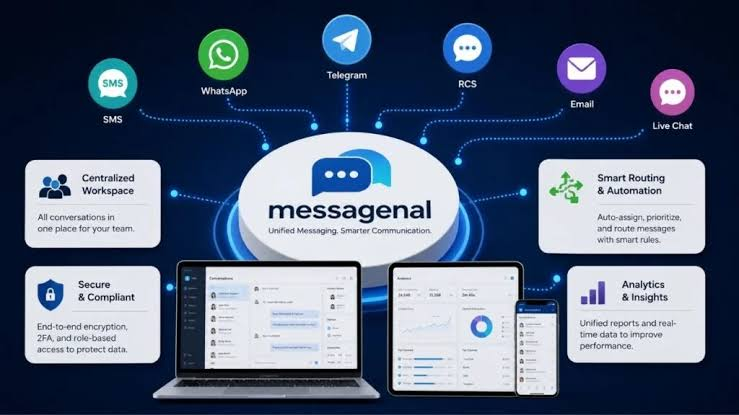
Is Messagenal a Messaging App?
There is not enough reliable public evidence to treat Messagenal as one universally recognized messaging application.
Some recent online articles describe the term as a communication framework, while others discuss it in connection with unified messaging or communication systems.
Therefore, users should identify the context in which they encountered the term.
If someone is discussing communication principles, Messagenal may refer to the broader concept.
If someone presents a specific website or software product as Messagenal, that product should be evaluated separately.
A name alone does not prove that different websites or services are connected.
Is Messagenal a Formal Communication Theory?
Messagenal should not currently be treated as a universally established academic communication theory.
The ideas associated with it are familiar: clarity, audience awareness, context, tone, purpose, and effective outcomes.
These principles already exist in professional communication, writing, psychology, marketing, and communication studies.
What is newer is the use of the word Messagenal to group these ideas together.
This is an important distinction for anyone researching the term.
Who Can Benefit From Messagenal?
Almost anyone who communicates digitally can use the basic principles.
Students can use them when emailing teachers.
Employees can use them when communicating with coworkers.
Managers can use them when assigning tasks.
Businesses can use them when communicating with customers.
Marketers can use them when writing campaigns.
Content creators can use them when explaining ideas.
Families and friends can also benefit from clearer messages.
The method does not belong to one profession.
Messagenal for Students
Students send many digital messages, including emails to teachers, project updates, group discussions, and questions about assignments.
A clear student email might include the assignment name, the specific question, and any relevant deadline.
Instead of:
“Can you help me?”
A better message might be:
“Hello Professor, I am working on the research assignment due Friday. Could you please clarify whether we need three or five sources?”
This gives the teacher enough information to provide a useful answer.
Messagenal for Businesses
Businesses can use clear communication at almost every stage of the customer journey.
This includes advertisements, website copy, emails, support messages, invoices, appointment reminders, and follow-up communication.
Clear messages can make a business appear more organized and trustworthy.
However, businesses should not use the concept as an excuse for manipulative communication.
A good message should be clear without hiding important information.
Transparency should remain more important than persuasion.
Ethical Use of Messagenal
Communication skills can be used for good or bad purposes.
Clear communication should not become a tool for manipulation.
For example, a company should not intentionally hide fees simply because the message is short and easy to read.
A marketing message should not create false urgency.
A customer service message should not intentionally confuse the customer.
A professional communication approach should support honesty, transparency, and respect.
This is an important part of responsible digital communication.
How to Know if Your Message Is Effective
After writing a message, imagine that you are the receiver.
Ask whether you could understand it without asking another question.
If the answer is no, add the missing information.
Another useful test is to identify the main action.
If the receiver has to guess what you want, the message may need improvement.
You can also ask someone to review important communication before sending it.
For high-stakes situations, a second opinion can be especially valuable.
Messagenal and the Future of Digital Communication
Digital communication will probably become even faster.
Artificial intelligence, automation, smart notifications, voice assistants, workplace platforms, and integrated messaging systems are continuing to develop.
As communication becomes faster, clarity may become even more important.
People may receive more automated messages than ever before.
The challenge will be deciding which information deserves attention.
This makes the central idea behind Messagenal useful even if the word itself changes over time.
The underlying principle is not complicated:
Make communication understandable.
Give people the information they need.
Respect their time.
Make important actions clear.
Frequently Asked Questions About Messagenal
Is Messagenal suitable for personal conversations?
Yes. The basic principles can be used in personal communication, but they should not make conversations feel overly formal. Friends and family can still communicate naturally while using clearer wording when an important issue needs to be understood.
Does using Messagenal require special software?
No. If Messagenal is understood as a communication approach, you do not need a special application. The principles can be used with email, SMS, workplace chat, social media, and other communication channels.
Can Messagenal replace email or text messaging?
No. Messagenal is better understood as an approach to communication rather than a replacement for established communication channels. Email, text messaging, chat apps, and other tools can all be used to apply its principles.
Is Messagenal useful for people who speak English as a second language?
Yes. Clear communication can be especially helpful when people have different language backgrounds. Using simple words, short sentences, clear context, and direct requests can make messages easier for a wider audience to understand.
How long should a Messagenal message be?
There is no fixed length. A message should be as short as possible while still providing the information the reader needs. A simple request may need one sentence, while an important business update may require several paragraphs. The goal is useful communication, not a specific word count.
Conclusion
Messagenal is best understood as an emerging term for a more thoughtful approach to digital communication. Its central idea is not to send more messages but to make important messages clearer, more purposeful, and easier to understand.
The concept focuses on simple principles such as purpose, context, audience awareness, tone, and clear next steps. These ideas can be used in emails, workplace chats, customer service, marketing, education, remote work, and everyday conversations.
Because the term is still developing, users should be careful with claims that present Messagenal as a specific official product or established communication theory. Current online sources use the term in several different ways, so context matters.
The most useful lesson is simple: good digital communication is not measured only by how quickly a message is sent. It is measured by whether the right person receives the right information, understands it correctly, and knows what to do next.
In a world filled with notifications and constant digital communication, that simple idea can make everyday conversations more effective, respectful, and meaningful.