Masgonzola: What It Is, Taste, Uses, Ingredients, and Complete Guide
Masgonzola is a creamy cheese product made by combining Gorgonzola with mascarpone. The combination brings together two very different Italian cheeses. Gorgonzola provides the salty, tangy, blue-cheese character, while mascarpone adds a soft, rich, smooth texture.
The name Masgonzola can be confusing because it sounds like the name of a completely separate traditional cheese. In practice, the term is generally used for a Gorgonzola and mascarpone combination. Similar products may also be labeled “Gorgonzola with Mascarpone,” “Gorgonzola e Mascarpone,” or “Gorgonzola-Mascarpone.” Commercial documentation confirms that products made from these two cheeses can be sold as a combined specialty. One documented product, for example, uses 60% mascarpone and 40% Gorgonzola.
For people in the United States, Masgonzola can be interesting because it offers some of the flavor of blue cheese without the full sharpness of a stronger Gorgonzola. It can be used in pasta, risotto, sauces, appetizers, sandwiches, pizza, bread spreads, and cheese boards.
This guide explains what Masgonzola is, where the name comes from, what it tastes like, how it is made, how to use it, how to store it, how to compare it with Gorgonzola and mascarpone, and what food-safety points consumers should understand.
What Is Masgonzola?
Masgonzola is generally a creamy cheese preparation made from two ingredients: Gorgonzola and mascarpone.
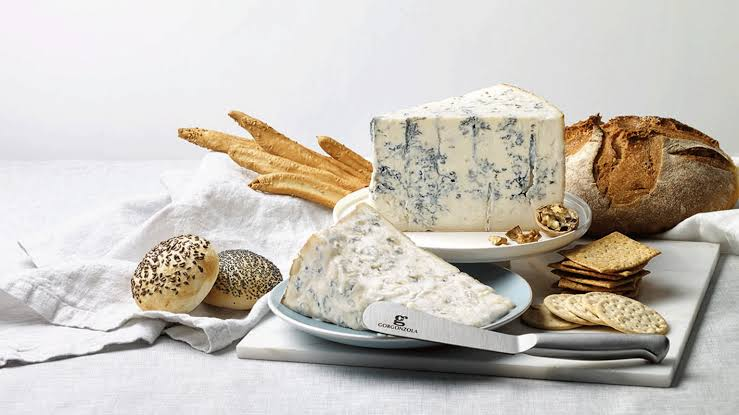
Gorgonzola is an Italian blue-veined cheese. It has a distinct savory, salty, tangy, and earthy flavor. Its blue-green or gray-blue veins are created during the cheese-making process. European Union specifications recognize Gorgonzola as a protected designation of origin, or PDO, cheese. The official specification describes Gorgonzola as a blue-veined cheese made from pasteurized whole cow’s milk.
Mascarpone is very different. It is soft, rich, creamy, and mild. It does not have the strong blue-cheese flavor associated with Gorgonzola.
When the two are combined, mascarpone can soften the intensity of Gorgonzola while Gorgonzola gives mascarpone a stronger savory character.
That balance is the central idea behind Masgonzola.
The exact composition is not universal. Some products can contain more mascarpone, while others can contain more Gorgonzola. Some preparations are blended, while others are arranged in layers. A commercial specification available online lists a product made with 60% mascarpone and 40% Gorgonzola, showing why it is important to check the individual product label rather than assume every Masgonzola has the same recipe.
Why Is It Called Masgonzola?
The name Masgonzola appears to be a combination of parts of two cheese names:
Mascarpone + Gorgonzola = Masgonzola
The “mas” portion can be associated with mascarpone, while “gonzola” comes from Gorgonzola.
This type of food naming is not unusual. Food producers and cooks sometimes combine words when two ingredients are closely associated with a particular preparation.
The name can make Masgonzola sound like an ancient cheese with its own separate history. However, available evidence supports a simpler explanation: it is a name used for the combination of mascarpone and Gorgonzola.
Recipe sources have used Masgonzola to describe the combination, including preparations in which the two cheeses are used together in dishes such as risotto.
Also Read: Blazertje: Meaning, Dutch Origin, Fashion Context, and Complete Guide
There is no strong evidence establishing one individual as the inventor of Masgonzola or proving an exact date when the name was first created.
That distinction is important for accurate food writing. It is better to describe Masgonzola as a cheese specialty or combination than to present unsupported stories about an ancient independent cheese tradition.
Is Masgonzola a Real Cheese?
Yes, Masgonzola is a real food term used for products or preparations combining mascarpone and Gorgonzola.
However, there is an important difference between a real food product and a protected cheese category.
Gorgonzola has an established PDO identity under European Union food-protection rules. The official specification identifies Gorgonzola as a protected cheese with defined characteristics and production requirements.
Masgonzola is different.
There is no separate Masgonzola PDO identified in the sources reviewed for this article. This means consumers should not automatically assume that every product called Masgonzola follows one official, standardized formula.
The practical result is simple:
Masgonzola can be understood as a Gorgonzola-and-mascarpone specialty, while Gorgonzola itself is a protected Italian cheese.
This is one of the most useful facts to know when researching the term online.
Is Masgonzola the Same as Gorgonzola?
No. Masgonzola and Gorgonzola are not the same product.
Gorgonzola is a specific Italian blue-veined cheese. It has its own protected designation and production specification. The European Union specification describes several Gorgonzola classifications based on size, flavor, and maturation.
Masgonzola uses Gorgonzola as one of its components and adds mascarpone.
The easiest way to understand the difference is:
| Feature | Masgonzola | Gorgonzola |
| Main components | Mascarpone and Gorgonzola | Gorgonzola cheese |
| Texture | Usually very creamy and soft | Varies from soft to firmer |
| Blue-cheese flavor | Usually softened | More direct and noticeable |
| Mascarpone included | Yes | No |
| Separate PDO identity | No separate Masgonzola PDO identified | Yes, Gorgonzola PDO |
| Common use | Spreads, sauces, pasta, risotto, appetizers | Cheese boards, sauces, pasta, salads and cooking |
The exact flavor of Masgonzola depends on the amount and type of Gorgonzola used.
What Does Masgonzola Taste Like?
Masgonzola usually has a creamy, buttery, salty, tangy, and mildly blue-cheese flavor.
The taste can change significantly depending on the proportions of mascarpone and Gorgonzola.
If there is more mascarpone, the product will generally feel:
- Softer
- Creamier
- Milder
- Less salty
- Less intensely blue
If there is more Gorgonzola, it will generally have:
- Stronger blue-cheese flavor
- More saltiness
- More tang
- More noticeable aroma
- A more pronounced savory character
This variation is one reason why Masgonzola should not be treated as having one fixed taste.
A commercial product documented by Alimenta describes a combination with 60% mascarpone and 40% Gorgonzola as having a soft texture and a flavor that is intense but mild.
That description captures the basic idea well: Masgonzola can retain the personality of blue cheese while feeling much softer and more approachable.
What Is the Texture of Masgonzola?
Texture is one of Masgonzola’s biggest attractions.
Mascarpone contributes a smooth, thick, creamy quality. Gorgonzola adds body and the characteristic structure associated with blue-veined cheese.
Depending on how it is prepared, Masgonzola may be:
- Smooth
- Spreadable
- Soft
- Creamy
- Slightly crumbly
- Layered
- Rich and dense
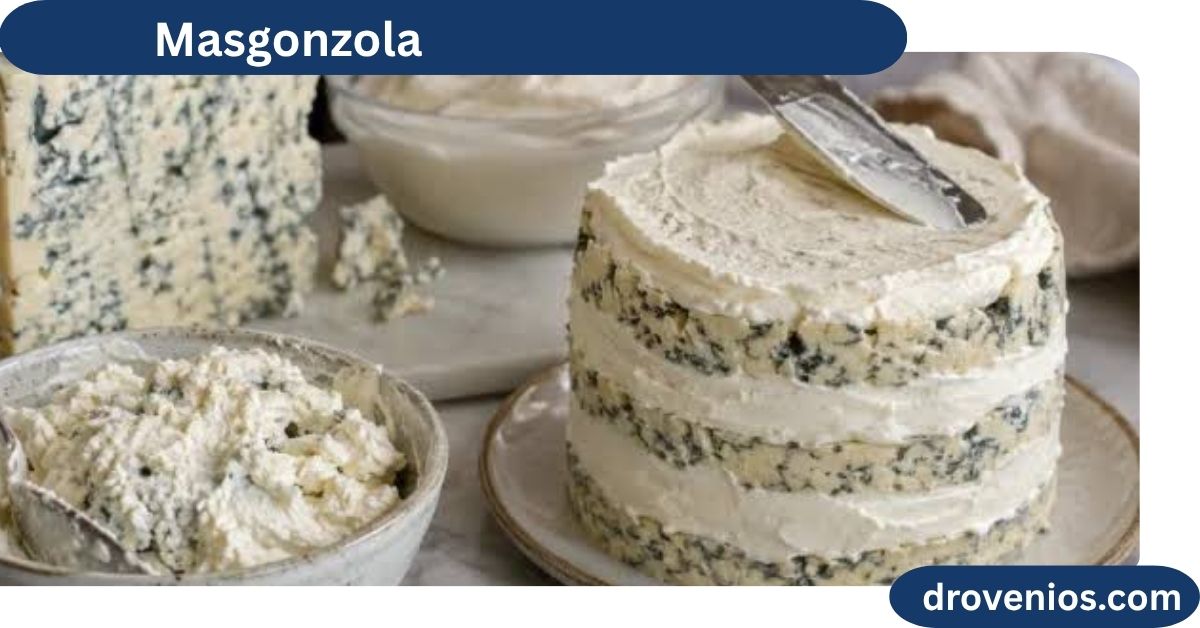
Some versions are blended together. Others visibly contain layers of white mascarpone and blue-veined Gorgonzola.
A layered version can be especially attractive on a cheese board because the white and blue colors create a clear visual contrast.
How Is Masgonzola Made?
There is no single universal Masgonzola production formula.
Generally, the process starts with prepared mascarpone and Gorgonzola.
The two cheeses may then be:
- Softened to a suitable consistency.
- Combined or arranged in layers.
- Packaged as a finished specialty product.
- Kept refrigerated.
A blended version creates a more uniform texture. A layered version allows consumers to see and taste the two components separately.
The proportions can also vary.
For example, a documented commercial product contains 60% mascarpone and 40% Gorgonzola. Other products may use a different ratio.
This is why it is better to look at the ingredients and product description instead of assuming that every Masgonzola is identical.
What Ingredients Are in Masgonzola?
The two main ingredients are:
Mascarpone
Mascarpone provides the creamy base. It is mild and rich and helps reduce the sharpness of the blue cheese.
Gorgonzola
Gorgonzola provides the blue-cheese character. It contributes saltiness, tang, savory flavor, aroma, and blue-green veining.
Some commercial versions can contain additional ingredients used in the production of the individual cheeses. For example, a documented product specification lists mascarpone made from milk cream with citric acid as an acidity regulator, while the Gorgonzola component contains pasteurized milk, salt, and rennet.
Always check the actual package label because ingredients can differ between manufacturers.
Why Combine Gorgonzola and Mascarpone?
The combination works because the two cheeses have different strengths.
Gorgonzola has a strong identity. It can add depth to a dish with only a small amount.
Mascarpone has a soft and creamy character. It can make a preparation smoother and less aggressive.
When combined, the cheeses create a middle ground.
This is useful for people who enjoy blue-cheese flavor but do not always want a very sharp cheese.
From a cooking perspective, the combination also has practical value. A creamy cheese melts into sauces more easily than a dry, crumbly cheese alone.
This makes Masgonzola particularly useful in dishes where flavor and texture need to work together.
Masgonzola vs Mascarpone
Mascarpone is much milder than Masgonzola.
Mascarpone is known for its rich, smooth texture and mild dairy flavor. It is widely used in desserts and savory dishes.
Masgonzola adds Gorgonzola to the equation.
This gives Masgonzola more:
- Saltiness
- Tang
- Savory depth
- Blue-cheese aroma
- Flavor complexity
If a recipe needs pure creaminess without blue-cheese flavor, mascarpone may be more appropriate.
If a recipe needs creaminess plus a noticeable savory cheese character, Masgonzola can be useful.
Masgonzola vs Blue Cheese
Masgonzola is not simply another name for blue cheese.
Blue cheese is a broad category that includes many cheeses with blue or blue-green veins created by specific molds used during production.
Gorgonzola is one example of a blue cheese.
Masgonzola is a combination that uses Gorgonzola and mascarpone.
This distinction matters because “blue cheese” can refer to many different products, each with its own flavor and texture.
Masgonzola is more specific because it points toward the mascarpone-Gorgonzola combination.
Is Masgonzola Stronger Than Gorgonzola?
Usually, adding mascarpone makes the overall product feel milder and creamier than Gorgonzola by itself.
However, the answer depends on the formula.
A Masgonzola containing a large amount of Gorgonzola can still have a noticeable blue-cheese taste.
A version containing more mascarpone may be much gentler.
The type of Gorgonzola also matters. Official Gorgonzola specifications distinguish mild and stronger styles with different maturation periods and flavor characteristics.
Therefore, “Masgonzola is always mild” would be too broad.
A more accurate statement is that mascarpone generally softens and rounds the Gorgonzola component.
How to Eat Masgonzola
Masgonzola can be eaten in many simple ways.
Spread It on Bread
A small amount can be spread on:
- Toast
- Baguette
- Crackers
- Crostini
- Rustic bread
Add fruit such as pear, apple, or grapes for a contrast between sweet and savory flavors.
Add It to Pasta
Masgonzola can create a creamy pasta sauce.
It can be combined with a small amount of pasta water to create a smoother sauce. Black pepper, herbs, mushrooms, spinach, or walnuts can complement the cheese.
Because the cheese is already flavorful, a large amount may not be necessary.
Use It in Risotto
Gorgonzola and mascarpone are both useful in creamy rice dishes.
Masgonzola can provide both cheese flavor and creaminess in one ingredient.
Recipe sources have specifically used Masgonzola in risotto preparations.
Add It to Pizza
Small pieces can be placed on pizza before baking.
It pairs especially well with:
- Pear
- Walnuts
- Caramelized onions
- Mushrooms
- Spinach
- Prosciutto
- Roasted vegetables
Make a Cheese Board
Masgonzola can add variety to a cheese board.
It works well alongside:
- Fresh fruit
- Dried fruit
- Nuts
- Crackers
- Bread
- Honey
- Mild cheeses
Because Masgonzola is rich, small portions are often enough.
Masgonzola in Pasta Recipes
Masgonzola is especially useful in pasta because its creamy structure can become part of the sauce.
A basic approach is to gently warm the cheese with a little pasta water.
Avoid excessive heat because dairy-based sauces can separate when treated too aggressively.
Good additions include mushrooms, spinach, walnuts, peas, roasted squash, or caramelized onions.
For a simple meal, cook pasta, reserve some pasta water, and combine the drained pasta with Masgonzola and a small amount of the reserved water.
Add black pepper and a few herbs if desired.
The result can be creamy without requiring a complicated sauce.
Masgonzola in Risotto
Masgonzola can also work well in risotto.
Risotto naturally provides a creamy base, so the cheese can be added toward the end of cooking.
A small amount can provide both richness and a noticeable savory flavor.
Possible ingredients include:
- Mushrooms
- Pear
- Walnuts
- Spinach
- Pumpkin
- Roasted vegetables
- Fresh herbs
The sweetness of pear is particularly useful because it contrasts with the salty and tangy notes of Gorgonzola.
Masgonzola and Fruit Pairings
Sweet fruit can balance the salty character of Masgonzola.
Good options include:
- Pears
- Apples
- Grapes
- Figs
- Dates
Dried fruit can also work well.
The basic food-pairing principle is contrast. A rich and salty cheese can become more balanced when served with something fresh or naturally sweet.
This does not mean that one pairing is universally correct. Personal taste matters.
Masgonzola and Nuts
Nuts are another natural partner.
Try:
- Walnuts
- Pecans
- Almonds
- Hazelnuts
Walnuts are particularly useful because their earthy flavor works naturally with blue cheese.
For a simple appetizer, place Masgonzola on a cracker and add a small piece of pear and a walnut.
Can Masgonzola Be Melted?
Yes, Masgonzola can generally be used in cooked dishes where a soft, creamy cheese is desired.
Its mascarpone component contributes to a smooth texture, while Gorgonzola adds flavor.
It can be incorporated into:
- Pasta sauces
- Risotto
- Pizza
- Baked vegetables
- Cream sauces
- Savory fillings
The exact melting behavior depends on the product’s composition and how it is heated.
Gentle heating is usually preferable for creamy dairy preparations.
Is Masgonzola Healthy?
Masgonzola can be part of a balanced diet, but it should be viewed as a rich dairy food rather than a low-calorie food.
Both mascarpone and Gorgonzola contain fat, and the exact nutritional values depend on the recipe and proportions.
Important nutrition factors can include:
- Calories
- Total fat
- Saturated fat
- Protein
- Sodium
- Calcium
Because there is no single universal Masgonzola formula, it is not accurate to give one nutrition label for every product.
If you are counting calories, sodium, saturated fat, or other nutrients, use the Nutrition Facts label on the specific product you buy.
Does Masgonzola Contain Dairy?
Yes.
Masgonzola is a dairy-based food because its main components are mascarpone and Gorgonzola.
People with a milk allergy should pay close attention to the label and avoid the product if advised by their healthcare professional.
It is also not naturally dairy-free or vegan.
Is Masgonzola Lactose-Free?
You should not assume that Masgonzola is lactose-free.
The amount of lactose in cheese can vary depending on the cheese-making process, ingredients, and product formulation.
Because Masgonzola is a combination rather than one standardized cheese with one universal formula, the safest approach is to check the product label for lactose information.
People with lactose intolerance may tolerate some dairy products better than others, but tolerance is individual.
Is Masgonzola Safe During Pregnancy?
Food safety depends on the specific product.
The FDA advises pregnant people to avoid soft cheeses and blue-veined cheeses made with unpasteurized milk and recommends checking the label to make sure the product is made with pasteurized milk.
This is especially relevant because Masgonzola is soft and contains a blue-veined cheese component.
If you are pregnant, check the package carefully.
Look for wording such as “made with pasteurized milk.”
If the label is unclear, ask the manufacturer or choose a product with clear pasteurization information.
This advice is important because Listeria can grow at refrigerator temperatures, and pregnant people are among the groups at higher risk of serious illness.
How Should Masgonzola Be Stored?
Masgonzola should be treated as a refrigerated perishable dairy product.
Keep it refrigerated and follow the manufacturer’s storage instructions.
Also Read: Basket Random GitHub: Complete Guide to the Game, GitHub Repositories, Code, Hosting, and Safety
The USDA advises keeping a refrigerator at 40°F or below.
Keep the cheese properly wrapped or sealed.
This helps:
- Reduce moisture loss
- Prevent unwanted odors
- Reduce exposure to other foods
- Maintain texture
- Reduce contamination risk
Once opened, follow the package’s instructions about how long the product should be used.
Do not rely only on the appearance of the cheese to decide whether it is safe.
Can You Freeze Masgonzola?
Freezing soft, creamy cheeses can change their texture.
After thawing, the cheese may become less smooth or slightly separated.
For this reason, freezing is generally less desirable when you want the original spreadable texture.
If you have a specific commercial Masgonzola product, check the manufacturer’s storage recommendations before freezing it.
How to Buy Masgonzola in the United States
Finding Masgonzola may require looking beyond the exact word “Masgonzola.”
In the United States, similar products may be labeled:
- Gorgonzola with Mascarpone
- Gorgonzola and Mascarpone
- Gorgonzola e Mascarpone
- Gorgonzola-Mascarpone
- Mascarpone-Gorgonzola
Check the refrigerated specialty cheese section.
Italian food stores, specialty cheese shops, larger supermarkets, and online specialty-food retailers may also carry similar products.
If you cannot find a product labeled Masgonzola, you can recreate the basic concept by combining mascarpone with Gorgonzola.
What Should You Look for on the Label?
When buying Masgonzola, examine several details.
Ingredient List
Look for mascarpone and Gorgonzola as the primary components.
Milk Information
If pasteurization matters to you, check whether the label states that the milk is pasteurized.
Nutrition Facts
Review calories, fat, saturated fat, protein, and sodium based on your dietary needs.
Storage Instructions
Follow the manufacturer’s refrigeration instructions.
Country and Producer Information
A clear producer name and product information can make it easier to understand exactly what you are buying.
How to Make a Simple Masgonzola-Style Spread at Home
A simple home version does not require complicated equipment.
You need:
- Mascarpone
- Gorgonzola
Start with a small amount of each cheese.
Allow them to soften enough to mix easily, while keeping them within safe food-handling conditions.
Mash or gently mix the Gorgonzola into the mascarpone.
Taste the mixture.
If you want a milder result, add more mascarpone.
If you want stronger blue-cheese flavor, increase the Gorgonzola.
This homemade mixture will not necessarily be identical to a commercial Masgonzola product because commercial products can use specific processing methods, ratios, and ingredients.
However, it demonstrates the basic concept very well.
A Simple Masgonzola Appetizer
One easy serving idea is a Masgonzola crostini.
Use:
- Toasted bread
- Masgonzola
- Thin pear slices
- Walnuts
- A small amount of honey, if desired
Spread the cheese over the bread.
Add a thin slice of pear.
Top with a walnut.
A small amount of honey can add sweetness.
This appetizer demonstrates why the cheese works: creamy, salty, tangy, sweet, fresh, and crunchy elements appear together.
Is Masgonzola Vegetarian?
Do not assume that every Masgonzola-style product is vegetarian.
Gorgonzola production can involve rennet, and the source of rennet can vary.
If you follow a vegetarian diet, check the product’s ingredient information or contact the manufacturer.
The same principle applies to homemade versions.
Is Masgonzola Gluten-Free?
The basic ingredients of mascarpone and Gorgonzola are dairy products, but that does not automatically mean every prepared Masgonzola product is certified gluten-free.
Cross-contact or additional ingredients can matter.
People with celiac disease or medically diagnosed gluten sensitivity should check the package and manufacturer information.
Common Misunderstandings About Masgonzola
“Masgonzola is another name for Gorgonzola.”
Not exactly.
Masgonzola generally refers to a combination of Gorgonzola and mascarpone.
“Every Masgonzola has the same recipe.”
No.
The ratio and production method can vary.
“Masgonzola is an official PDO cheese.”
The available evidence does not identify a separate Masgonzola PDO. Gorgonzola, by contrast, has official PDO protection.
“Masgonzola is always very mild.”
Not necessarily.
The strength depends on how much Gorgonzola is included and which Gorgonzola is used.
“The name means it must be an ancient cheese.”
The name alone does not establish an ancient history.
Available evidence supports describing it as a combination of mascarpone and Gorgonzola.
Why Is Masgonzola Becoming More Interesting to Consumers?
One reason is accessibility.
People increasingly look for foods that provide familiar flavors in a new format.
Gorgonzola has a strong identity, but some consumers find blue cheese too intense.
Mascarpone is familiar because of its use in creamy desserts and Italian cooking.
Combining the two creates an easy concept to understand: take the flavor of blue cheese and add a creamy component.
Another reason is versatility.
Masgonzola can work in both simple and sophisticated dishes.
It can appear on a casual cracker or become part of a restaurant-style risotto.
That flexibility makes the product useful beyond the traditional cheese board.
Masgonzola as a Search Term
The word Masgonzola also creates an interesting search-intent problem.
A person searching for “Masgonzola” may be asking:
- What is Masgonzola?
- Is Masgonzola a real cheese?
- Is Masgonzola the same as Gorgonzola?
- What is Masgonzola made from?
- Where can I buy Masgonzola?
- How do I use Masgonzola?
- Can Masgonzola be used in pasta?
- Is Masgonzola safe during pregnancy?
- Is Masgonzola a traditional Italian cheese?
The best answer should therefore explain the product rather than simply repeat the keyword.
Search engines also benefit from clear relationships between related concepts. Terms such as Gorgonzola, mascarpone, Italian cheese, blue cheese, creamy cheese, cheese spread, pasta sauce, risotto, cheese board, and pasteurized milk naturally help explain the topic.
Masgonzola and Food Culture
Masgonzola illustrates an important idea in food culture: not every interesting food needs to be an ancient, independently defined variety.
Some food products become popular because two established ingredients work well together.
In this case, Gorgonzola and mascarpone already have strong identities.
Gorgonzola contributes heritage, blue-veined character, and savory intensity.
Mascarpone contributes creaminess and richness.
The combination is valuable because it changes the experience of both.
This is a useful way to understand modern food terminology. A new or informal name does not necessarily represent a new agricultural product or protected cheese category. Sometimes it simply provides a convenient name for a recognizable combination.
How Masgonzola Can Fit Into American Cooking
Although its ingredients are strongly associated with Italian food, Masgonzola can fit many American meals.
For example, it can be used in:
- Burgers
- Sandwiches
- Steak sauces
- Baked potatoes
- Mac and cheese variations
- Vegetable gratins
- Pizza
- Pasta
- Salads
- Appetizers
The key is portion control.
Because the cheese can be rich and flavorful, a small amount can have a noticeable effect.
This makes it useful when you want to add depth without covering an entire dish in cheese.
Best Flavor Pairings for Masgonzola
Masgonzola works particularly well with foods that provide contrast.
Sweet Foods
Pear, fig, apple, dates, grapes, and honey can balance salty cheese.
Crunchy Foods
Walnuts, pecans, almonds, and toasted bread provide textural contrast.
Vegetables
Mushrooms, spinach, onions, potatoes, squash, and roasted vegetables can complement its savory character.
Herbs
Fresh herbs can add brightness to rich cheese-based dishes.
Grains and Pasta
Rice, risotto, pasta, and bread provide neutral bases that allow the cheese to stand out.
What Makes Masgonzola Different From Other Cheese Blends?
Its defining feature is the particular pairing of Gorgonzola and mascarpone.
Many cheese blends combine strong and mild cheeses, but this combination is distinctive because the two components have very different textures and flavor profiles.
Also Read: Türk Idla: Meaning, Digital Culture, Identity, and Online Trends
The result can be both visually interesting and practical.
The blue-veined Gorgonzola provides visual contrast against the white mascarpone.
At the same time, the mascarpone changes the mouthfeel of the Gorgonzola.
That combination of appearance, texture, and flavor is a major reason the product can stand out.
Frequently Asked Questions About Masgonzola
1. Does Masgonzola need to be served at room temperature?
Masgonzola can become easier to spread when it is slightly less cold, but food safety should come first. Keep it refrigerated according to the product instructions and avoid leaving perishable dairy foods out for extended periods. For serving, follow safe food-handling practices and return unused cheese to refrigeration promptly.
2. Can Masgonzola be used in desserts?
It can be experimented with in sweet-and-savory desserts, particularly when paired with fruit, honey, nuts, or dark chocolate. However, its Gorgonzola component gives it a savory and salty character, so it will not behave like plain mascarpone. The result will be very different from a traditional mascarpone dessert.
3. Does Masgonzola have probiotics?
You should not assume that it does. The presence and amount of live microorganisms depend on the individual cheeses, production process, and product. If probiotic content is important to you, check the manufacturer’s information rather than relying on the name Masgonzola.
4. Can Masgonzola replace cream cheese?
It can replace cream cheese in some savory recipes, but the result will taste different. Masgonzola has the distinctive flavor of Gorgonzola, so it will add blue-cheese notes that ordinary cream cheese does not provide. It can work particularly well in savory spreads, sauces, and appetizers.
5. How can I reduce the blue-cheese flavor in Masgonzola?
Adding more mascarpone is the simplest way to create a milder homemade combination. You can also pair the cheese with neutral foods such as bread, pasta, potatoes, or rice. Sweet ingredients such as pear or apple can also create a stronger contrast with the salty and tangy flavor.
Conclusion
Masgonzola is a useful and interesting cheese combination that brings together the bold personality of Gorgonzola and the smooth richness of mascarpone.
The simplest way to understand it is not as a mysterious new cheese, but as a creamy Gorgonzola-mascarpone specialty. Gorgonzola contributes the salty, tangy, blue-cheese character, while mascarpone makes the overall texture softer, richer, and generally less intense.
The exact experience can vary because Masgonzola does not have one universal formula. Some versions are blended, while others are layered. Ingredient ratios can also differ, so checking the product label is important.
For American consumers, Masgonzola can be a flexible ingredient. It can be spread on bread, added to pasta, melted into risotto, used on pizza, served with fruit and nuts, or included on a cheese board.
Its biggest culinary advantage is balance. Gorgonzola gives the combination character, while mascarpone provides creaminess.
From a food-safety perspective, Masgonzola should be handled as a refrigerated dairy product. Consumers should follow the manufacturer’s storage instructions and check pasteurization information when needed. This is especially important for pregnant people and other individuals at higher risk from foodborne illness.
Ultimately, Masgonzola is a good example of how two established foods can create a new culinary experience when combined. Understanding what is actually in the product, rather than relying only on the unusual name, makes it easier to choose, prepare, serve, and enjoy it responsibly.