Tsunaihaiya: Meaning, Origin, History, Cultural Context, and Modern Use
Tsunaihaiya is an unusual and intriguing word that often leaves people curious the first time they see it. Unlike familiar English words, it does not have one widely accepted definition that can be found in everyday dictionaries. Instead, the term appears in different online and cultural contexts, creating questions about its meaning, origin, history, and modern use.
Part of the interest surrounding tsunaihaiya comes from its distinctive sound. It feels rhythmic, memorable, and unusual. The word can also be connected with ideas such as connection, creativity, cultural exchange, and personal meaning. At the same time, it is important to separate documented information from interpretations that have developed around the term online.
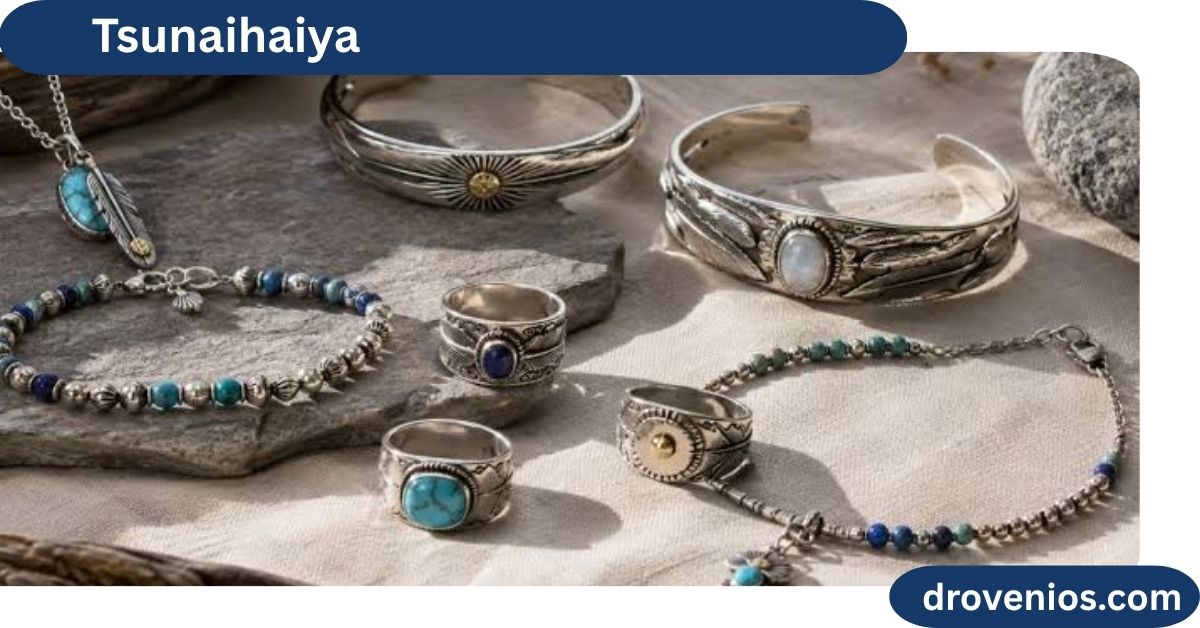
Tsunaihaiya is also associated with the name Tsunai Haiya, particularly in the world of jewelry and artistic design. The name has been connected with a creative approach that brings together Japanese craftsmanship and Native American artistic influences.
Because information about the word can be inconsistent, understanding tsunaihaiya requires a thoughtful approach. Rather than assigning one simple definition, it is more useful to look at the different ways the term has been used and why it has attracted attention.
What Is Tsunaihaiya?
Tsunaihaiya is an uncommon term that is most notably associated with the name Tsunai Haiya and a jewelry design tradition that combines different cultural influences.
The word is not commonly used in everyday American English. Most people who encounter it are likely to discover it through an internet search, a product description, an artistic discussion, or an article about unusual words.
The term has also developed a broader symbolic identity online. Some people describe it through ideas such as connection, balance, renewal, creativity, and harmony. These descriptions can help explain why the word attracts attention, but they should be viewed as interpretations unless supported by clear historical or linguistic evidence.
One of the most useful ways to understand tsunaihaiya is to see it as a word with several layers.
There is the name itself.
There is its connection to jewelry and artistic craftsmanship.
There is its cultural background.
And there is the newer meaning that people may attach to it through online discussions.
These layers should not automatically be treated as the same thing.
Tsunaihaiya Meaning
The meaning of tsunaihaiya is not completely straightforward.
Some descriptions connect the name with the idea of the rising sun and Japan. Other discussions give the word a more symbolic meaning related to connection, unity, renewal, or harmony.
This difference is important.
When an unusual term becomes popular online, people often try to explain it using familiar concepts. Over time, these explanations can be repeated until they appear to be established facts. However, repetition does not necessarily prove a word’s original meaning.
For that reason, the most responsible way to discuss the meaning of tsunaihaiya is to acknowledge that its modern interpretations vary.
In a symbolic sense, the word can be understood as representing the meeting of different ideas or cultures. This interpretation fits particularly well with its association with artistic collaboration and jewelry.
The idea of connection is especially interesting because tsunaihaiya has been presented in a context where different artistic backgrounds meet. Japanese craftsmanship and Native American artistic influences create a natural connection between traditions that developed in very different environments.
Is Tsunaihaiya a Real Word?
Yes, tsunaihaiya is a real term in the sense that it has been used as a name and appears in identifiable artistic and commercial contexts.
However, that does not mean it is a common English vocabulary word.
There is an important difference between a word appearing as a brand, name, artistic term, or cultural expression and appearing as a standard English dictionary entry.
Many familiar brand names were created specifically for companies, products, or creative projects. They may come from another language, combine several sounds, or be given a special meaning by their creators.
Also Read: Yenkly com: A Complete Guide to the Multi-Niche Blog and Online Publication
Tsunaihaiya can be approached in a similar way.
It is a recognizable name, but readers should not assume that it functions like an ordinary English word such as “connection,” “sunrise,” or “harmony.”
The Tsunai Haiya Jewelry Connection
One of the strongest modern associations with tsunaihaiya is jewelry.
Tsunai Haiya has been associated with jewelry that combines Japanese craftsmanship with Native American artistic influences. The brand’s story is connected with designers and artists who worked across cultural and artistic boundaries.
This makes the name particularly interesting because it is not simply a random collection of sounds. It has been used in a creative environment where craftsmanship, cultural identity, and artistic expression come together.
Jewelry associated with the name may include items such as rings, bracelets, bangles, pendants, and other decorative pieces.
Silver and natural stones are among the types of materials associated with this style of jewelry.
The designs often emphasize texture, handmade character, and strong visual details rather than the appearance of ordinary mass-produced accessories.
The Story Behind Tsunai Haiya
The modern story of Tsunai Haiya is connected with Japanese designer Yusuke Kuwano and Native American artist Craig Dan Goseyun.
Their collaboration is significant because it represents an exchange between different artistic backgrounds.
Kuwano’s experience with Japanese metalworking and his exposure to the art environment of the American Southwest helped create a foundation for the brand’s artistic direction.
Craig Dan Goseyun is associated with the San Carlos Apache community. His involvement gives the story a specific cultural context rather than allowing it to be described simply as generic “Native American art.”
This distinction is important.
Native American communities are not one single culture. The United States is home to many Indigenous nations, each with its own history, traditions, languages, artistic practices, and identities.
Therefore, responsible writing should avoid treating all Indigenous cultures as interchangeable.
Tsunaihaiya and Japanese Craftsmanship
Japanese craftsmanship has a long reputation for attention to detail, patience, and careful treatment of materials.
These qualities are especially visible in traditional metalworking and jewelry.
Small details can have a major effect on the appearance of a handmade object. Surface texture, hammer marks, polishing, shaping, and stone placement can all influence the final result.
When Japanese craftsmanship is combined with another artistic tradition, the result can become visually distinctive.
This is one reason the Tsunai Haiya name is interesting to people who enjoy jewelry, handmade products, and cross-cultural design.
It demonstrates how artistic traditions can influence one another without necessarily becoming identical.
Tsunaihaiya and Native American Artistic Influence
The Native American connection is another important part of the Tsunaihaiya story.
The phrase “Native American art” covers many different traditions, so it is better to be specific whenever possible.
The Tsunai Haiya story has been associated with the San Carlos Apache community through Craig Dan Goseyun.
This provides a more precise cultural reference than simply describing the work as “tribal” or “Native American style.”
Cultural terminology matters because broad labels can remove the identity and history of the people who created a tradition.
When discussing Indigenous-inspired jewelry, readers should therefore pay attention to the artist, community, materials, techniques, and historical context rather than focusing only on appearance.
Why the Rising Sun May Be Connected With Tsunaihaiya
The rising sun is one of the concepts associated with explanations of the Tsunai Haiya name.
The image of a rising sun naturally carries several meanings.
It can represent:
- A new beginning
- Hope
- Renewal
- Light
- Growth
- A new day
- Continuity
- Change
The rising sun also has a strong association with Japan. Japan has long been connected with the idea of the “Land of the Rising Sun.”
Because of this cultural association, the rising sun can provide a meaningful bridge between the name and its Japanese context.
However, symbolic interpretation should not automatically be confused with a formal dictionary definition.
A design may represent sunrise without the word itself literally meaning “sunrise.” Keeping these ideas separate makes the explanation more accurate.
Tsunaihaiya as a Symbol of Connection
One of the most interesting modern interpretations of tsunaihaiya is the idea of connection.
This interpretation makes sense because the name is associated with a collaboration between different artistic backgrounds.
Connection can mean many things.
It can mean the connection between people.
It can mean the connection between cultures.
It can mean the connection between traditional craftsmanship and modern design.
It can also mean the connection between an artist and the person who eventually wears the finished piece.
Jewelry naturally carries this idea.
A ring, necklace, bracelet, or pendant can have personal meaning beyond its physical value. It may remind someone of a person, a place, an event, a relationship, or a particular period in life.
In this broader sense, tsunaihaiya can be viewed as a name that inspires thoughts about relationships and shared creativity.
Why Tsunaihaiya Sounds Unique
The sound of tsunaihaiya is one reason the term is memorable.
For English speakers, the combination of syllables is unusual. It does not immediately resemble a familiar English word.
That can make it useful as a brand name.
Unique names can attract attention because they create curiosity. When people see an unfamiliar term, they may want to search for it simply to discover what it means.
This can create a powerful relationship between a name and its audience.
A common word may be easy to understand but difficult to own as a unique digital identity.
An unusual word may be harder to understand but easier to remember.
Tsunaihaiya sits somewhere in that interesting space.
Tsunaihaiya and Cultural Exchange
Cultural exchange is an important concept when discussing Tsunaihaiya.
Throughout history, artists have learned from people outside their own communities. Techniques, materials, visual ideas, and design concepts have traveled between regions and generations.
However, cultural exchange should be approached carefully.
There is a difference between respectful collaboration and using another culture simply as decoration.
A genuine collaboration can involve people from different backgrounds working together, sharing knowledge, and contributing to the final creative work.
That context is particularly relevant to the Tsunai Haiya story because its history is connected with identifiable artists rather than an anonymous attempt to imitate a cultural style.
What Makes Handmade Jewelry Different?
Handmade jewelry can have qualities that distinguish it from factory-produced accessories.
For example, handmade pieces may contain small differences in:
- Surface texture
- Shape
- Polishing
- Stone placement
- Hammer marks
- Metal thickness
- Finishing details
These differences are not necessarily defects.
In many handmade traditions, small variations are part of the character of the object.
However, consumers should not assume that every handmade product is automatically better than a mass-produced item.
Quality depends on craftsmanship, materials, construction, durability, design, and the standards used by the maker.
The word “handmade” should be treated as useful information, not as a guarantee of quality by itself.
Tsunaihaiya Jewelry Materials
Jewelry connected with the Tsunai Haiya name may feature materials such as sterling silver, gold-colored finishes, and natural stones.
Different pieces can have different material combinations.
When purchasing jewelry, it is always useful to check the exact product information rather than relying on general descriptions of a brand.
Important details include:
- Metal purity
- Stone type
- Product dimensions
- Weight
- Finish
- Manufacturing location
- Care instructions
- Return conditions
- Seller information
This is particularly important when purchasing older, rare, discontinued, or second-hand pieces.
How to Identify Authentic Tsunaihaiya Jewelry
If someone is interested in buying Tsunai Haiya jewelry, authentication should be approached carefully.
A product description alone does not prove authenticity.
Look for:
- Clear photographs
- Detailed product information
- Identifiable maker marks
- Original packaging when available
- A credible seller
- A reasonable description of the item’s history
- Consistent material information
- A clear return policy
Be cautious when a seller uses phrases such as “extremely rare,” “museum quality,” or “one of a kind” without providing evidence.
Emotional marketing can make a product sound more valuable than it actually is.
A careful buyer should focus on verifiable characteristics.
Is Tsunaihaiya a Japanese Word?
It would be too simple to describe tsunaihaiya as an ordinary Japanese word.
The term has a Japanese connection through the Tsunai Haiya jewelry brand and its artistic background.
It has also been represented using Japanese writing.
However, the broader history of the name involves other cultural references as well.
Therefore, describing tsunaihaiya as simply “a Japanese word” can create an incomplete picture.
A more careful description is that Tsunai Haiya is a name associated with a Japanese artistic and jewelry context while also having a reported connection to Apache culture.
Is Tsunaihaiya an Apache Word?
The name has been associated with Apache language and culture in descriptions of the Tsunai Haiya brand.
However, readers should be careful with precise linguistic claims.
Apache languages are real Indigenous languages with their own structures, histories, and communities. A claim about an Apache word should ideally be supported by reliable linguistic or community-based information.
It is not responsible to assume that an online definition automatically represents the official meaning of a term in an Indigenous language.
This is one of the most important points to remember when researching tsunaihaiya.
The brand’s cultural story can be discussed while still acknowledging that the exact linguistic history of the name may not be fully documented in easily accessible sources.
Tsunaihaiya vs. Tsunai Haiya
You may see the term written in two main ways:
Tsunaihaiya
and
Tsunai Haiya
These spellings can refer to the same general name and are useful search variations.
You may also see the name written in uppercase as TSUNAIHAIYA because brands often use capitalization for visual identity.
For someone researching the term, searching multiple spelling variations can help locate additional information.
Why People Search for Tsunaihaiya
An unusual keyword often creates several types of search intent.
Someone searching tsunaihaiya may want to know its meaning.
Another person may be interested in jewelry.
Someone else may have seen the word on social media and want to understand its origin.
Possible searches include:
- What is tsunaihaiya?
- What does tsunaihaiya mean?
- Tsunaihaiya meaning
- Tsunaihaiya origin
- Tsunai Haiya jewelry
- Tsunaihaiya jewelry history
- Is tsunaihaiya Japanese?
- Is tsunaihaiya Apache?
- How do you pronounce tsunaihaiya?
- What does Tsunai Haiya represent?
These searches show why a single short definition is not enough.
People may be looking for linguistic information, cultural information, brand information, or simply an explanation of something they recently encountered.
Tsunaihaiya and Internet Culture
The internet can change the way people understand unusual words.
A term may begin with one specific meaning.
Then someone writes about it.
Another website summarizes the article.
A social media account gives the term a symbolic interpretation.
Someone else creates a new definition.
Eventually, readers may encounter many versions of the same word.
This can make it difficult to determine which information is original.
Tsunaihaiya is an excellent example of this process.
Its documented association with jewelry provides one clear context, while other online explanations may expand the term into broader philosophical ideas.
That does not mean every newer interpretation is wrong. It simply means readers should know the difference between documented history and modern interpretation.
Tsunaihaiya and Digital Literacy
Digital literacy is especially important when researching unusual terms.
A good reader should ask a few basic questions.
Also Read: Syrenis Strategic Initiatives: A Complete Guide to Strategy, Growth, and Sustainable Success
Who wrote this information?
Where did the information come from?
Is the writer quoting a primary source?
Are other independent sources saying the same thing?
Does the article clearly separate facts from opinions?
Does it explain uncertainty?
These questions can prevent misinformation.
The internet rewards content that attracts attention. A dramatic story may receive more clicks than a careful explanation.
That is why responsible research sometimes requires accepting that the answer is not perfectly simple.
“Available evidence suggests” can be more trustworthy than “This definitely means.”
Common Myths About Tsunaihaiya
Myth 1: Tsunaihaiya Has One Universal Definition
There is no strong reason to assume that every online explanation uses the word in exactly the same way.
Different sources may emphasize different aspects.
Myth 2: It Is a Common English Word
Tsunaihaiya is not a normal everyday English vocabulary word.
Its primary visibility comes from specific artistic, cultural, and online contexts.
Myth 3: Everything Written About Its Origin Is Proven
This is not necessarily true.
Some explanations are interpretations or repeated online claims.
Myth 4: Native American Culture Is One Single Tradition
The United States has many Indigenous nations and communities.
Each has its own cultural identity and history.
Myth 5: A Unique Name Automatically Has an Ancient History
An unusual name may sound ancient without actually having a documented ancient origin.
Sound and history are two different things.
How Tsunaihaiya Can Be Used as a Modern Concept
Even when the historical meaning of an unusual word is uncertain, people can give it personal significance.
Tsunaihaiya can inspire ideas such as:
- Connection
- Cultural exchange
- Creativity
- Renewal
- Craftsmanship
- Personal identity
- Friendship
- Artistic collaboration
- New beginnings
These concepts are particularly appropriate when discussing the word as a modern creative idea rather than claiming that they are its official historical definition.
This distinction allows people to explore the word creatively without turning personal interpretation into historical fact.
Tsunaihaiya and Personal Meaning
Words do not always have to carry the same meaning for every person.
A name can remind one person of art and another person of friendship.
A piece of jewelry can represent a relationship to one person and artistic craftsmanship to another.
This is one reason unusual words can become powerful symbols.
Tsunaihaiya’s distinctive sound and cultural associations give people room to interpret it in different ways.
The key is to be clear about the difference between personal meaning and documented meaning.
What Businesses Can Learn From Tsunaihaiya
There is also a useful branding lesson in the name.
A distinctive brand name can create curiosity.
When people cannot immediately understand a name, they may search for it.
That search creates an opportunity to tell a story.
But a strong brand story should be connected to real information.
People are increasingly interested in where products come from, who makes them, what materials are used, and what cultural influences shaped them.
A unique name may attract the first search.
A trustworthy story can create long-term interest.
Tsunaihaiya and Sustainable Thinking
Although the name itself does not automatically mean sustainability, handmade jewelry can encourage people to think differently about consumption.
Instead of buying large quantities of inexpensive accessories, some consumers prefer fewer pieces that have a stronger personal connection.
Durable jewelry can sometimes remain useful for many years.
However, sustainability should not be assumed simply because something is handmade.
Consumers should also consider:
- Material sourcing
- Product durability
- Repairability
- Packaging
- Production methods
- Product lifespan
- Seller transparency
These factors provide a more complete picture.
How to Research an Unfamiliar Cultural Term
If you encounter another word like tsunaihaiya, use a simple research process.
Start with the spelling.
Search alternative spellings.
Identify the earliest credible context you can find.
Look for the people or organization connected with the term.
Check whether language experts or community sources discuss it.
Compare several independent sources.
Finally, separate documented facts from interpretation.
This method is useful for researching names, cultural expressions, brands, historical terms, and unfamiliar words.
Why Accuracy Matters With Indigenous Language
Language is closely connected with identity.
A careless explanation can unintentionally simplify or misrepresent an Indigenous culture.
That is why terms connected with Native American languages deserve additional care.
Writers should avoid inventing meanings.
They should also avoid presenting an uncertain translation as a fact.
When information is limited, saying that the evidence is limited is not a weakness.
It is a sign of responsible research.
Is Tsunaihaiya a Place?
There is no strong basis for treating tsunaihaiya as a commonly recognized geographic location.
The term is much more closely associated with its artistic and jewelry context.
If a website describes Tsunaihaiya as a hidden city, ancient village, famous destination, or geographical region, readers should look for clear evidence before accepting that description.
Unusual keywords can sometimes be turned into fictional stories or invented travel concepts online.
A professional article should distinguish those creative uses from documented geography.
Is Tsunaihaiya a Person?
Tsunaihaiya is not primarily known as the name of a widely recognized individual.
Its strongest documented modern association is with the Tsunai Haiya artistic and jewelry name.
If someone uses tsunaihaiya as a username, character name, project name, or personal name, that would be a separate use.
This is another reason context matters when searching an unusual term.
Is Tsunaihaiya a Philosophy?
Tsunaihaiya can be discussed philosophically if someone chooses to use it as a symbol.
Ideas such as connection, renewal, balance, creativity, and cultural exchange can all fit naturally into a philosophical discussion of the word.
However, there is a difference between saying:
“Tsunaihaiya can symbolize connection.”
and saying:
“Tsunaihaiya is an ancient philosophy of connection.”
The first is an interpretation.
The second is a historical claim that would require substantial evidence.
Good writing keeps those categories separate.
How to Use Tsunaihaiya in a Sentence
If you are writing about the documented brand context, you might say:
“Tsunaihaiya is a distinctive name associated with a jewelry tradition that brings together Japanese craftsmanship and Native American artistic influences.”
If you are using the word symbolically, you could write:
“For this project, tsunaihaiya represents the idea of connection between different creative traditions.”
The second example clearly identifies the meaning as a chosen interpretation.
That makes the writing more transparent.
Tsunaihaiya as a Search Keyword
From an SEO perspective, tsunaihaiya is an interesting long-tail keyword.
Because the word is uncommon, people searching for it are likely to have a very specific information need.
A useful page should answer that need quickly.
The strongest content topics include:
- Tsunaihaiya meaning
- Tsunaihaiya origin
- Tsunaihaiya history
- Tsunai Haiya jewelry
- Tsunaihaiya cultural meaning
- Tsunaihaiya pronunciation
- Tsunaihaiya Japanese connection
- Tsunaihaiya Apache connection
- Tsunaihaiya symbolism
- Tsunaihaiya modern use
The goal should not be to repeat the keyword in every paragraph.
Instead, related concepts should naturally explain the topic.
This creates a better reading experience and gives search engines meaningful context.
Also Read: Messagenal: A Complete Guide to Clear and Meaningful Digital Communication
Frequently Asked Questions About Tsunaihaiya
1. Can Tsunaihaiya be used as a personal name?
There is no widely established naming tradition that makes tsunaihaiya a common personal name in the United States. However, people can use unusual words as creative names, usernames, project names, or artistic identities. Its use as a personal name would depend on the individual context.
2. Does Tsunaihaiya have a standard English translation?
There is no single universally accepted English translation that can safely be applied in every context. Different descriptions associate the term with different ideas, so it is better to explain the context in which the word is being used.
3. Can Tsunaihaiya be used in a business name?
An unusual word can be used as a business name if it is legally available and does not conflict with an existing trademark or other protected business identity. Anyone considering the name for commercial use should perform a proper trademark and business-name search first.
4. Why does Tsunaihaiya appear in different forms online?
The name can appear as Tsunaihaiya, Tsunai Haiya, or in uppercase branding. Differences can result from spelling preferences, branding choices, transliteration, or how individual websites format the name.
5. Why should writers be careful when explaining Tsunaihaiya?
The term has limited and sometimes inconsistent documentation. Some online descriptions provide symbolic or cultural explanations without clearly showing where the information originated. Careful writers should therefore distinguish documented information from interpretation and avoid making unsupported claims about Indigenous language or history.
Conclusion
Tsunaihaiya is an unusual word with an interesting modern story. It attracts attention because of its distinctive sound, its cultural associations, and its connection with artistic craftsmanship.
The strongest modern context for the term is Tsunai Haiya, a jewelry name associated with Japanese craftsmanship and Native American artistic influence. The story involves Japanese designer Yusuke Kuwano and San Carlos Apache artist Craig Dan Goseyun, creating a cross-cultural artistic connection that makes the name particularly distinctive.
At the same time, many broader explanations of tsunaihaiya have appeared online. Some connect it with the rising sun, while others interpret it through concepts such as connection, harmony, creativity, renewal, and cultural exchange.
These ideas can help people explore the word, but they should not all be treated as proven historical definitions.
The most useful way to understand tsunaihaiya is therefore to look at context. When discussing the jewelry brand, focus on its artists, craftsmanship, materials, and cultural background. When discussing the meaning of the word, recognize that some parts of its history remain unclear. When using tsunaihaiya symbolically, clearly identify the interpretation as a modern or personal meaning.
Ultimately, the appeal of tsunaihaiya comes from its ability to create curiosity. It is a reminder that an unfamiliar word can open the door to questions about art, language, culture, identity, craftsmanship, and the way information spreads across the internet.
That curiosity is valuable. The best way to follow it is with an open mind, careful research, and respect for the cultures and people connected with the story.