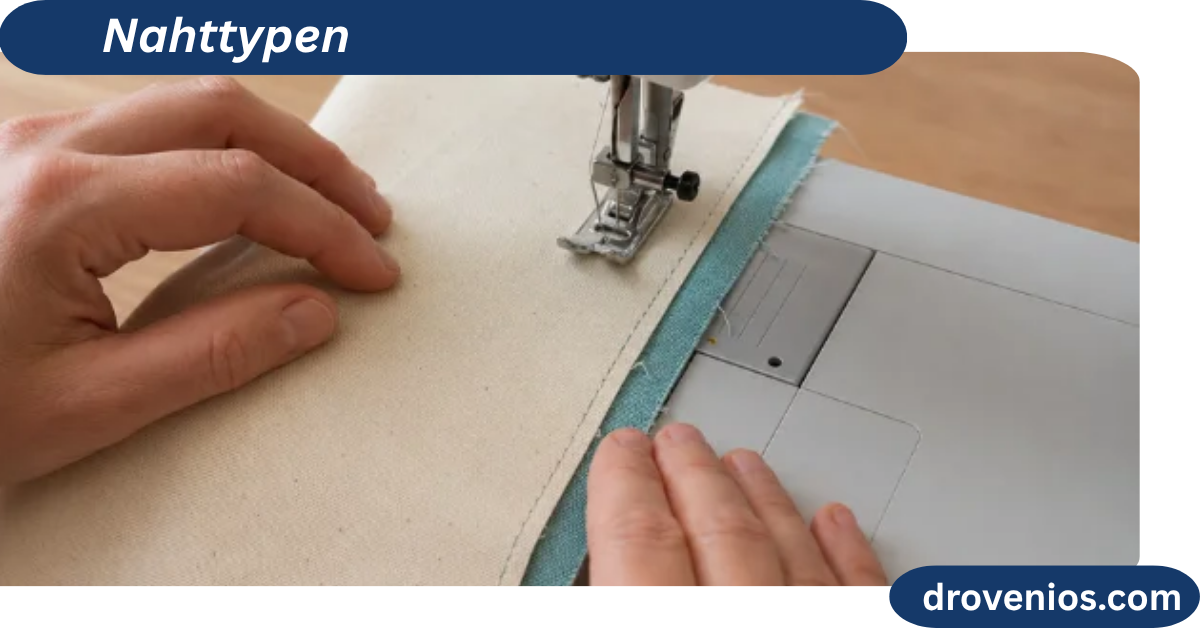
Nahttypen: A Complete Guide to Seam Types in Sewing and Garment Construction
Nahttypen is the German term for seam types. In sewing, a seam is the place where two or more pieces of fabric are joined together. Different seam types are designed for different purposes. Some are simple and quick to sew, while others are stronger, cleaner, more decorative, or better suited to thick and delicate fabrics.
Understanding nahttypen is useful for beginners, home sewers, fashion students, quilters, costume makers, and anyone interested in clothing construction. The right seam can affect the strength, comfort, appearance, durability, and overall quality of a finished garment.
A basic seam may look simple from the outside, but there are many ways to construct one. A plain seam may be enough for a simple cotton shirt, while a flat-felled seam can be useful for durable garments such as jeans. A French seam can give delicate fabric a clean finish, while a lapped seam can work well when a flat or strong construction is needed.
This guide explains the most common nahttypen in simple English. It covers how seam types work, where they are used, their advantages and disadvantages, fabric considerations, sewing-machine settings, seam finishes, professional garment construction, and practical tips for choosing the right seam.
What Does Nahttypen Mean?
Nahttypen means “seam types” in German.
The word can be understood as:
- Naht = seam
- Typen = types
Therefore, nahttypen refers to different methods of joining fabric pieces.
In sewing terminology, a seam is not simply a line of stitches. It can include the way fabric edges are positioned, how they are stitched, how the seam allowance is handled, and how the finished edge is protected from fraying.
Different seam types can create different results.
For example, one seam may prioritize strength, another may prioritize appearance, and another may be chosen because it prevents raw fabric edges from being visible.
What Is a Seam in Sewing?
A seam is a constructed connection between two or more pieces of material.
When making a shirt, for example, separate pieces may be used for the front, back, sleeves, collar, and cuffs. These pieces need to be joined together. Seams create those connections.
A seam normally includes three important elements:
- The fabric pieces being joined
- The stitching that holds them together
- The seam allowance around the stitching
The seam allowance is the extra fabric beyond the stitching line. It gives the sewer enough material to construct and finish the seam.
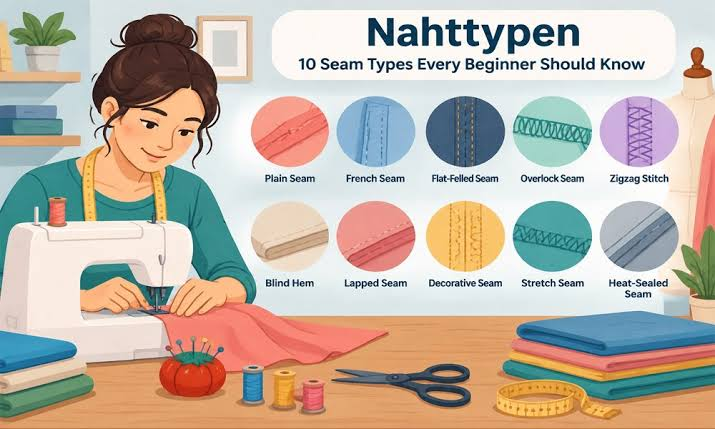
The width of a seam allowance can vary depending on the pattern, garment, fabric, and construction method.
Also read:Bodenxt: A Complete Guide to Boden’s Green Transition and Sustainable Development
Why Are Different Nahttypen Important?
There is no single seam that works perfectly for every sewing project.
A lightweight blouse and a pair of work jeans have very different needs.
A blouse may need:
- soft seams
- a clean inside finish
- minimal bulk
- comfort against the skin
Jeans may need:
- high strength
- resistance to repeated washing
- resistance to pulling
- durable seam construction
This is why understanding nahttypen is important.
The seam should match the fabric and the purpose of the finished item.
A seam that is excellent for one project may be unsuitable for another.
Main Types of Seams in Sewing
There are many seam variations, but several basic nahttypen appear frequently in clothing and textile construction.
The most common include:
- Plain seam
- French seam
- Flat-felled seam
- Lapped seam
- Bound seam
- Hong Kong seam
- Slot seam
- Welt seam
- Double-stitched seam
- Overlock or serger seam
- Zigzag-finished seam
Some of these describe the actual method of joining fabric, while others describe the way the seam allowance is enclosed or finished.
Understanding this difference makes sewing terminology easier to follow.
Plain Seam
The plain seam is one of the simplest and most widely used seam types.
Two fabric pieces are placed with their right sides facing each other. They are stitched along the seam line. The fabric is then opened so the seam allowance lies toward the inside.
This construction is common in everyday clothing.
A plain seam can be used for:
- shirts
- dresses
- skirts
- pants
- pillow covers
- curtains
- bags
- many basic sewing projects
Its main advantage is simplicity.
A beginner can learn the basic sewing process with a plain seam before moving to more advanced seam constructions.
However, the raw edges of a plain seam can fray.
For that reason, the seam allowance may need additional finishing.
How to Finish a Plain Seam
A plain seam can be finished in several ways.
One common method is using a serger or overlock machine.
Another option is a zigzag stitch on a regular sewing machine.
The edge can also be pinked with pinking shears, although this is not suitable for every fabric or every garment.
A seam allowance can also be turned under or enclosed depending on the garment design.
The correct finish depends on the fabric and how much wear the garment will receive.
French Seam
A French seam is a clean seam construction in which the raw fabric edges are enclosed inside the seam.
This makes it particularly useful for lightweight and delicate fabrics.
A French seam is often associated with:
- fine cotton
- silk
- chiffon
- lightweight polyester
- delicate blouses
- lingerie-style construction
- lightweight dresses
The main benefit is appearance.
Instead of seeing a raw edge inside the garment, the finished seam looks neat and enclosed.
This can also reduce fraying.
However, a French seam creates additional layers of fabric. It may therefore be unsuitable for very thick fabrics.
It also requires more sewing steps than a basic plain seam.
Flat-Felled Seam
A flat-felled seam is a strong seam construction in which the raw edges are enclosed and secured with additional stitching.
It is commonly associated with durable clothing.
Examples include:
- jeans
- work shirts
- outdoor clothing
- uniforms
- heavy-duty garments
One advantage is strength.
Another is that the finished seam is relatively flat and neat.
Because the raw edges are enclosed, the seam also has good resistance to fraying.
Flat-felled seams require careful construction because several layers of fabric may be involved.
The thickness of the fabric should therefore be considered before choosing this seam.
Lapped Seam
A lapped seam joins fabric pieces by overlapping one fabric edge over another.
This can create a relatively flat construction.
Lapped seams may be useful for:
- leather
- suede
- heavy fabrics
- technical textiles
- garments where a flat construction is preferred
The exact construction can vary depending on the material and design.
Unlike a standard seam where two raw edges meet at a seam line, the layers in a lapped seam overlap.
This can provide useful design and construction options.
Bound Seam
A bound seam uses an additional strip of fabric or binding to cover the raw seam allowance.
This creates a clean edge and can add a decorative element.
Binding may be made from:
- matching fabric
- contrasting fabric
- bias tape
- specially prepared strips
Bound seams are useful when the inside of a garment needs a finished appearance.
They can also be used for certain home sewing projects and exposed seam details.
Hong Kong Seam
The Hong Kong seam is a refined seam-finishing method that uses bias-cut fabric to cover the raw edges of a seam allowance.
It is often used when the inside of a garment is meant to look attractive and professionally finished.
This technique can be found in:
- tailored jackets
- unlined garments
- high-quality sewing projects
- handmade clothing
- fashion samples
A Hong Kong finish can make the inside of a garment look almost as carefully constructed as the outside.
The disadvantage is that it takes more time and fabric than a simple zigzag finish.
Welt Seam
A welt seam can create a raised or structured appearance.
Depending on the specific construction, a welt may be formed by folding or positioning fabric so that a defined ridge or strip appears along the seam.
Welted constructions are useful when both function and visual detail matter.
They can be seen in different forms of clothing, bags, upholstery, and textile products.
The exact meaning of “welt seam” can vary between sewing contexts, so the construction should always be considered rather than relying only on the name.
Slot Seam
A slot seam is a decorative seam construction in which fabric or another material can appear between stitched sections.
It can create a strong visual line.
Slot seams are often used when the seam itself is intended to become part of the garment design.
They can be made with contrasting fabric for a more visible effect.
This technique demonstrates an important idea about nahttypen: seams are not always hidden construction details. They can also be design features.
Overlock and Serger Seams
An overlock seam is produced using an overlock or serger machine.
A serger trims the fabric edge while wrapping thread around the edge.
This helps prevent fraying and can produce a professional-looking finish.
Overlock machines are common in garment production because they can process fabric edges quickly.
They are particularly useful for:
- knitwear
- T-shirts
- activewear
- casual clothing
- stretch fabrics
A serger can also be used to finish seam allowances even when the actual seam is constructed with another stitch.
Seam Types for Knit Fabrics
Knit fabrics behave differently from woven fabrics.
They can stretch, curl, and move during sewing.
For this reason, the seam needs to accommodate fabric movement.
Common choices include:
- overlock stitching
- stretch stitches
- narrow zigzag stitching
- coverstitch construction for certain hems
A standard straight stitch can sometimes break when a stretchy fabric is pulled.
That does not mean straight stitches are never used on knitwear. It means the seam construction must match the fabric’s stretch and the location of the seam.
Seam Types for Woven Fabrics
Woven fabrics are made from interlacing yarns.
Examples include:
- cotton
- linen
- denim
- poplin
- canvas
- wool
- many polyester fabrics
Because woven fabrics can fray when cut, seam finishing is often important.
A plain seam with an overlock finish can be appropriate for many woven garments.
French seams can work well with lightweight woven fabrics.
Flat-felled seams can be useful for stronger garments.
The best choice depends on weight, structure, fraying behavior, and design.
Seam Types for Denim
Denim is a strong woven fabric, but different denim weights can behave differently.
For jeans and heavy denim garments, durable seam constructions are important.
Flat-felled seams are commonly associated with denim because they can provide strength while enclosing raw edges.
A heavy-duty sewing machine, suitable needle, strong thread, and appropriate seam allowance may also be needed.
When sewing thick denim, the challenge is often not just the seam type.
The machine must be able to move through multiple layers without skipped stitches or excessive strain.
Seam Types for Silk and Delicate Fabric
Delicate fabrics require careful handling.
Silk and lightweight materials can shift, fray, or develop visible needle marks.
French seams are often useful because they enclose raw edges and provide a neat finish.
A fine needle and suitable thread can also help reduce damage.
Testing the seam on a fabric scrap is especially important.
A seam that looks perfect on medium-weight cotton may not behave the same way on silk.
Seam Types for Leather
Leather is different from ordinary fabric.
Once a needle makes a hole in leather, that hole generally remains.
This means seam placement and stitch length require careful consideration.
Lapped seams can be useful in some leather applications because they can avoid creating certain bulky seam structures.
Special leather needles and suitable sewing machines may be required for thicker leather.
The correct technique depends strongly on leather thickness and the project.
Seam Allowance and Nahttypen
Seam allowance is one of the most important concepts in seam construction.
It is the distance between the fabric edge and the stitching line.
A pattern may specify a particular seam allowance.
The allowance provides room for construction and finishing.
If the seam allowance is too narrow, the seam may become weak.
If it is unnecessarily wide, it can create additional bulk.
This is why accurate cutting and consistent stitching are important.
Seam Strength
A seam must be strong enough for the intended use.
Seam strength depends on several factors.
These include:
- fabric strength
- thread strength
- stitch type
- stitch length
- seam allowance
- number of stitching rows
- fabric construction
- sewing tension
- seam direction
- stress placed on the garment
A strong fabric does not automatically create a strong seam.
Poor stitching can weaken even high-quality material.
Seam Slippage
Seam slippage occurs when yarns in a woven fabric move away from the stitching line.
It can happen more easily with certain loosely woven fabrics.
This may cause an opening to develop near the seam.
Choosing an appropriate seam allowance, stitch construction, and fabric handling method can reduce the risk.
Testing is especially useful with fabrics that appear loosely woven.
Seam Puckering
Seam puckering happens when the fabric gathers or wrinkles along a seam.
It can result from:
- incorrect thread tension
- unsuitable needle
- incorrect stitch length
- fabric feeding problems
- excessive pressure
- unsuitable thread
- fabric movement
Puckering can make an otherwise well-made garment look poor.
If puckering occurs, test different machine settings on a scrap piece before changing the finished garment.
Choosing the Right Nahttypen
Choosing a seam should start with the fabric and the purpose of the project.
Ask a few simple questions.
What type of fabric am I using?
Is it light or heavy?
Does it stretch?
Does it fray easily?
Will the seam experience strong pulling forces?
Will the inside of the garment be visible?
Does the seam need to be decorative?
Does the garment need to withstand frequent washing?
These questions often make the decision much easier.
Simple Comparison of Common Seam Types
| Seam type | Main benefit | Common use |
| Plain seam | Simple and versatile | Everyday clothing |
| French seam | Clean enclosed edges | Lightweight fabrics |
| Flat-felled seam | Strong and durable | Jeans and workwear |
| Lapped seam | Flat overlapping construction | Heavy or specialized fabrics |
| Bound seam | Clean edge finish | Garments and textile projects |
| Hong Kong seam | Refined inside finish | Tailoring and unlined garments |
| Overlock seam | Fast edge finishing | Knitwear and mass production |
| Welt seam | Structured or decorative effect | Clothing and textile design |
This table is a starting point rather than a strict rule. A skilled sewer may adapt a seam according to the material and design.
Seam Finishes and Seam Types Are Not the Same
A common beginner mistake is treating seam construction and seam finishing as identical.
They are related but different.
A seam construction explains how the fabric pieces are joined.
A seam finish explains how the raw edges are protected or presented afterward.
For example, you can create a plain seam and then finish its raw edges with an overlock stitch.
The seam is still a plain seam, but it has an overlocked seam finish.
This distinction is useful when learning sewing terminology.
Common Seam Finishes
Several seam finishes can be used with different nahttypen.
Zigzag Finish
A zigzag stitch can be sewn along a raw edge to reduce fraying.
It is accessible to people who have a standard sewing machine.
Also read:Yenkly com: A Complete Guide to the Multi-Niche Blog and Online Publication
Overlock Finish
A serger can trim and wrap the edge with thread.
This provides a fast and neat finish.
Pinking
Pinking shears cut the edge into a zigzag pattern.
This can reduce fraying for some woven fabrics, although it is not suitable for every material.
Turned Finish
The raw edge can sometimes be folded under and stitched.
This can produce a clean appearance but may add bulk.
Bias Binding
Bias binding can cover a raw edge completely.
It is useful when appearance is important.
How Seam Type Affects Garment Comfort
A seam can affect how comfortable a garment feels.
A bulky seam in a sensitive area may cause irritation.
A stiff seam can restrict movement.
A poorly finished edge can scratch the skin.
For this reason, garment designers think about seam placement as well as seam strength.
This is particularly important for:
- underwear
- sportswear
- children’s clothing
- sleepwear
- uniforms
- fitted garments
Comfort is one reason why different seam constructions exist.
Seam Placement Matters
The same seam type can feel different depending on where it is placed.
A strong seam across a shoulder may need to handle a different type of stress than a seam along a trouser leg.
Areas that experience repeated movement often need durable construction.
These may include:
- armholes
- crotch seams
- waist seams
- side seams
- shoulder seams
- pockets
Professional garment construction considers the entire garment rather than choosing one seam type for everything.
Sewing Machine Settings and Seam Quality
The machine itself is only part of good seam construction.
Correct settings matter too.
Important factors include:
- needle size
- needle type
- thread type
- thread tension
- stitch length
- presser-foot pressure
- fabric feeding
- machine speed
For example, a lightweight fabric may require a finer needle than heavy denim.
A stretch fabric may require a stitch that can accommodate movement.
Always test machine settings on a scrap before starting the final garment.
Why Test Sewing Matters
Test sewing is one of the easiest ways to improve results.
Take a small piece of the same fabric.
Sew the planned seam.
Then inspect it.
Check:
- Is the seam straight?
- Does the fabric pucker?
- Does the thread break?
- Does the fabric stretch correctly?
- Are the raw edges controlled?
- Is the seam comfortable?
- Does the seam look right from the outside?
A few minutes of testing can prevent hours of repairing a finished garment.
Common Mistakes When Sewing Seams
Beginners often make similar mistakes.
One common mistake is failing to match the fabric to the seam construction.
Another is using the wrong needle.
Incorrect seam allowance is another frequent problem.
Other issues include:
- rushing through corners
- pulling fabric while sewing
- ignoring thread tension
- failing to backstitch when appropriate
- not pressing seams
- skipping fabric testing
- using dull needles
- ignoring fabric grain
- failing to finish raw edges
Improving these basic habits can make a major difference.
The Role of Pressing in Seam Construction
Pressing is often overlooked by beginners.
It is different from ironing clothes.
In sewing, pressing helps shape and stabilize fabric during construction.
After stitching a seam, pressing can help it lie flat.
Depending on the garment, the seam allowance may be pressed:
- open
- toward one side
- toward the back
- toward the front
The correct direction depends on the construction.
Good pressing can make a simple seam look much more professional.
Seam Types in Mass Production
Industrial clothing manufacturers use seam construction based on speed, cost, strength, appearance, and production requirements.
Industrial sewing machines can perform specific operations very quickly.
For example, overlock machines are commonly used for edge finishing and certain types of garment assembly.
Factories may use specialized machines for:
- chain stitching
- lockstitching
- coverstitching
- buttonholes
- decorative stitching
- seam joining
- edge binding
Industrial production therefore uses a broader system than a typical home sewing machine.
Seam Types and Garment Durability
Durability depends on more than the name of the seam.
A seam may be considered strong, but the actual performance depends on construction quality.
For example, a flat-felled seam made poorly may perform worse than a correctly constructed plain seam with an appropriate finish.
The following factors all matter:
- fabric quality
- thread selection
- stitch density
- seam allowance
- seam direction
- sewing accuracy
- finishing
- garment care
This is why practical testing remains important.
Seam Types in Quilting
Quilting uses seams differently from garment sewing.
Quilters commonly join fabric pieces to create blocks and larger designs.
The seam allowance is often kept consistent because small inaccuracies can affect how pieces align.
A standard straight seam is common in patchwork.
Also read:Syrenis Strategic Initiatives: A Complete Guide to Strategy, Growth, and Sustainable Success
Pressing direction also matters because it can affect how multiple fabric layers meet.
Quilting demonstrates how a simple seam can become part of a larger geometric structure.
Seam Types in Home Textiles
Nahttypen are not limited to clothing.
Seams are also used in:
- curtains
- pillow covers
- table linens
- blankets
- cushions
- fabric storage items
- bags
- decorative textiles
The ideal seam depends on the product.
A decorative cushion may prioritize appearance.
A reusable shopping bag may need stronger seams.
A curtain may need clean construction and appropriate handling of fabric weight.
Sustainability and Seam Construction
Good seam construction can help clothing last longer. Strong and well-finished seams are less likely to fail during regular use and washing, which can reduce the need to replace clothes often. Repairable seams are also useful because small problems can sometimes be fixed instead of throwing away the entire garment. Learning basic seam construction can therefore support sustainable fashion by making it easier to repair, alter, reuse, and maintain clothing for a longer time.
How Beginners Can Learn Nahttypen
Beginners do not need to learn every seam type at once. It is easier to build skills gradually, starting with a basic plain seam and learning how to finish raw fabric edges. Once these skills are comfortable, beginners can practice French seams and then move to stronger constructions such as flat-felled seams. Bound and decorative seam techniques can be learned later. Practicing on inexpensive fabric scraps before using valuable material can help beginners improve their accuracy and confidence without unnecessary frustration.
A Simple Practice Project
A small fabric pouch can be a useful beginner project.
You can use it to practice:
- cutting
- seam allowance
- straight stitching
- pressing
- edge finishing
- turning
- reinforcement
Once you understand these basic skills, you can experiment with different nahttypen.
For example, make one pouch with a plain seam and another with an enclosed seam.
Comparing the two helps you understand how seam construction changes the final product.
How Professionals Choose Seam Types
Professional sewing is often based on function first.
The designer considers:
- fabric
- garment type
- expected stress
- production method
- appearance
- comfort
- cost
- washing requirements
- durability
The seam is then selected to meet those requirements.
This is a useful mindset for beginners.
Instead of asking, “Which seam is the best?” ask, “Which seam is best for this fabric and this purpose?”
There is rarely one universal answer.
Nahttypen and Fashion Design
Seams can also influence the visual identity of a garment.
Designers may deliberately use seams to create:
- vertical lines
- horizontal lines
- geometric shapes
- contrast
- structure
- texture
- visual balance
Decorative seams can change how a garment appears on the body.
A seam is therefore both a construction tool and a design element.
How to Improve Seam Quality
Improving seam quality starts with careful and accurate sewing rather than expensive equipment. Cut the fabric properly, mark important points, and choose the right needle and thread for the material. Keep the seam allowance even while sewing, and avoid pulling or forcing the fabric through the machine. Press each seam at the correct stage to help it lie flat and look neat. It is also important to check both the outside and inside of the finished work for loose stitches, puckering, uneven edges, or other problems. These simple habits can make seams stronger, cleaner, and more professional.
Safety Tips When Sewing
Basic safety habits can make sewing more comfortable and reduce the risk of accidents. Keep your fingers away from the moving needle and make sure your work area has enough light. Turn off the sewing machine before changing the needle or performing maintenance. Keep loose clothing, hair, and other items away from moving machine parts. Handle scissors, pins, and needles carefully, and store them safely when they are not being used. When pressing fabric, place the iron on a stable, heat-safe surface and keep the work area organized. A clean workspace also makes it easier to handle fabric, tools, and sewing equipment safely.
How to Read Seam Terminology Online
The term nahttypen may appear in German sewing resources, fashion education, textile manuals, and pattern instructions.
When reading information online, look at the context.
Some websites may use slightly different names for similar constructions.
Other sources may translate German terminology into English differently.
A diagram can sometimes be more useful than a translation because seam construction is visual.
For students and beginners, comparing the written description with an illustration or sample can make terminology much easier to understand.
Frequently Asked Questions About Nahttypen
What seam type is easiest for someone who has never sewn before?
A plain seam is generally one of the easiest seams to learn because its construction is straightforward. It teaches important basic skills such as maintaining a seam allowance, controlling fabric, sewing a straight line, and pressing the finished seam.
Which seam type is suitable for clothing that will be washed frequently?
The answer depends on the fabric and garment, but a durable seam with an appropriate edge finish is usually important for frequently washed clothing. The stitching, thread, fabric, and seam finish should all be selected together rather than choosing a seam based only on its name.
Why do some seams have several rows of stitching?
Additional rows can improve strength or create a decorative effect. In garments such as jeans and workwear, multiple rows may help reinforce areas that receive repeated stress. The number and placement of stitches should still match the fabric and construction.
Can one garment use more than one type of seam?
Yes. This is very common. A garment may use a simple seam in one area, a stronger construction in a high-stress area, and a specialized finish in another area. Different parts of the garment have different functional requirements.
How can I tell if a seam has been sewn correctly?
Look at both sides of the fabric. The stitching should be secure and reasonably even, the seam should lie correctly, and there should not be excessive puckering, loose threads, unexpected gaps, or fabric damage. For important garments, test the seam under the type of movement and use the finished item will experience.
Final Thoughts
Nahttypen simply means seam types, but the subject covers an important part of sewing and textile construction. Seams determine how fabric pieces are connected and can influence strength, comfort, durability, appearance, and how a garment behaves after repeated use.
A plain seam is a useful starting point for beginners, while French seams can provide a clean enclosed finish for lightweight fabrics. Flat-felled seams are associated with durable garments, and techniques such as bound or Hong Kong finishes can create a more refined inside appearance. Overlock construction is especially useful for efficient edge finishing and many types of knitwear.
The most important lesson is that there is no single seam type that is best for every project. Good seam selection begins with understanding the fabric, the garment, the expected stress, the desired appearance, and the level of durability required. By practicing different nahttypen on fabric scraps and learning how each construction behaves, beginners can gradually develop the same practical understanding that supports professional-quality sewing.