Bodenxt: A Complete Guide to Boden’s Green Transition and Sustainable Development
Bodenxt is a development platform created by the Municipality of Boden in northern Sweden to manage and support a major green transformation of the local community. The initiative is connected to rapid industrial growth, new infrastructure, housing needs, workforce development, business opportunities, and the wider move toward a more sustainable economy.
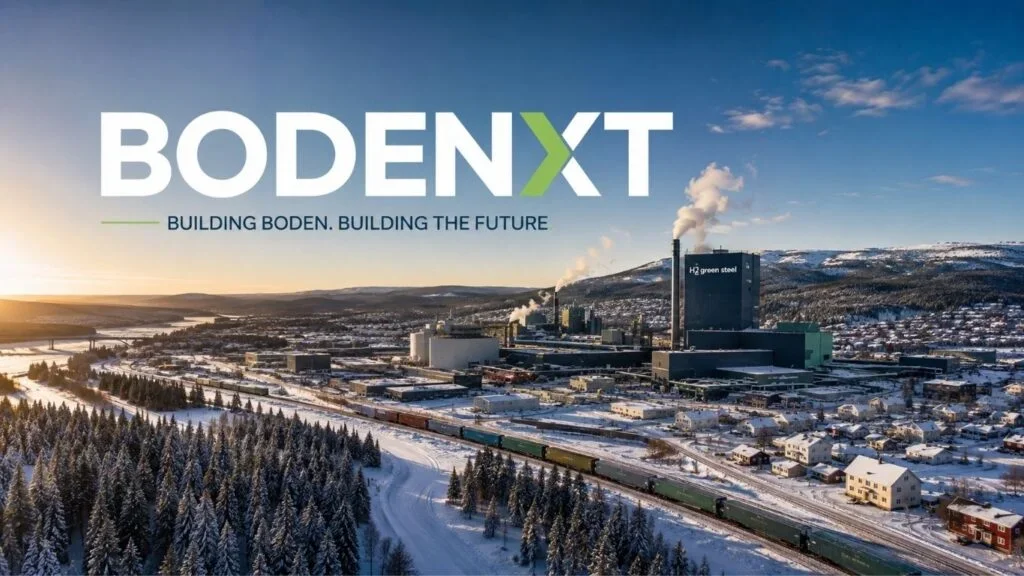
The name Bodenxt may look like a technology company, software platform, or private business. However, its official meaning is different. Boden Municipality describes Bodenxt as a platform for the major green transition of the entire society in Boden. The development is strongly connected to Stegra’s large green steel project, which is being built in Boden and is intended to use green hydrogen and renewable electricity in steel production.
This makes Bodenxt interesting beyond Sweden. It provides an example of how a local community can prepare for large industrial investments while also thinking about housing, transportation, education, jobs, public services, and long-term sustainability.
What Is Bodenxt?
Bodenxt is the Municipality of Boden’s framework for managing a period of unusually rapid development in Boden, Sweden.
The municipality says that Boden is preparing for a development leap equivalent to around 20 years of normal development within only a few years. Stegra’s establishment is described as an important accelerator of this transformation.
In simple terms, Bodenxt is about making sure that industrial growth does not happen separately from community development.
A large industrial project can create jobs and investment, but it can also create new demands. Workers need homes. Businesses need skilled employees. Roads and railways need to handle additional traffic. Schools and public services may need to adjust. Local companies may need new opportunities. Utilities and other infrastructure also need to keep pace.
Also read:Syrenis Strategic Initiatives: A Complete Guide to Strategy, Growth, and Sustainable Success
Bodenxt brings these different needs into a broader development structure.
The municipality describes work around skills supply, living and housing, business development, and infrastructure above and below ground. An official municipal explanation of the model also describes four strategic themes: living and housing, infrastructure, skills supply, and business development.
What Does Bodenxt Mean?
The word Bodenxt is connected to Boden and its future development.
The exact name is less important than what the initiative represents. It refers to a coordinated approach to the community’s transformation rather than one individual construction project.
Bodenxt can therefore be understood as a framework for managing growth.
Instead of looking at a new industrial plant by itself, the municipality is considering the wider system around it. This includes people, companies, housing, infrastructure, education, and public services.
That broader approach is important because economic transformation can affect many parts of a community at the same time.
Why Was Bodenxt Created?
Boden is experiencing a major period of investment and industrial development.
The municipality has positioned the region as an important location for the green industrial transition in northern Sweden. Stegra’s green steel development is one of the most important projects connected to this change.
When an area receives a large industrial investment, the effects can extend far beyond the factory itself.
For example, a growing industrial workforce can increase demand for:
- Housing
- Schools and childcare
- Transportation
- Restaurants and retail
- Healthcare and public services
- Skilled workers
- Roads and railways
- Utilities
- Local suppliers
- Training and education
- Community facilities
Bodenxt is designed to help coordinate these types of needs.
The basic idea is practical: if a community is changing quickly, its planning systems also need to change quickly.
Bodenxt and Stegra
Stegra is one of the most important drivers of Boden’s current transformation.
Stegra is building a large green steel facility in Boden. Its planned production system combines green hydrogen, green iron, and green steel. The company says the Boden plant is designed to produce up to 5 million tonnes of green steel annually by 2030.
The project is significant because traditional steelmaking is highly energy intensive and historically relies heavily on fossil fuels.
Stegra’s process is designed to use green hydrogen instead of coal in the direct reduction of iron ore. The company says the process can reduce CO2 emissions by up to 95% compared with traditional steelmaking. That figure is the company’s stated comparison and should be understood as a project claim rather than a guarantee for every steel product or production method.
The connection between Stegra and Bodenxt is important.
Stegra is the industrial investment, while Bodenxt represents the municipality’s wider response to the community changes associated with that investment.
In other words, Bodenxt is not the green steel factory.
It is the broader development framework around Boden’s transformation.
How Green Steel Is Connected to Bodenxt
Green steel may sound like a narrow industrial topic, but its effects can reach an entire city.
A large steel facility requires employees, transportation, energy, water systems, suppliers, construction services, housing, and other support systems.
This creates a chain of economic and social activity.
For example, more industrial employment can lead to more people moving into the area. More residents can create demand for apartments, homes, schools, shops, restaurants, recreational services, and public transportation.
At the same time, companies may move into the region because they want to supply the new industrial activity.
This means the green transition can become a wider economic transition.
Bodenxt exists partly to manage this wider picture.
The Main Areas of Bodenxt
Bodenxt focuses on several connected areas of community development.
The municipality’s current English description identifies skills supply, living and housing, business development, and infrastructure above and below ground. A municipal description of the governance model also organizes the work around four themes.
These areas are closely connected.
Skills Supply and Workforce Development
A major industrial transformation needs people with the right skills.
Boden is therefore working on ways to attract, develop, and connect workers with employment opportunities.
This includes people already living in Boden as well as people moving to the region from other parts of Sweden and other countries.
The municipality has reported international recruitment connected to Stegra and has also introduced initiatives designed to help local businesses find suitable employees.
In January 2026, Boden also launched an engineering program aimed at preparing people for future jobs created by the changing labor market.
Workforce development is important because a community cannot support rapid industrial growth simply by building factories.
People are needed to operate businesses, maintain infrastructure, provide services, and create new companies.
Living and Housing
Housing is another major part of Bodenxt.
When new jobs attract workers, housing demand can increase quickly.
This can be particularly difficult for a smaller community because housing construction often takes time. Planning, permits, land preparation, construction, and infrastructure all have to move forward.
Boden has already experienced growing housing demand connected to the transformation.
The municipality reported new residents arriving because of Stegra and has also worked on temporary accommodation for contractors and workers.
In 2026, Boden Municipality also reported an acute housing shortage that could affect the community’s development.
This shows why housing is not a secondary issue.
If a community creates thousands of potential jobs but does not have enough places for workers and families to live, growth can become difficult.
Business Development
Green industrial development can create opportunities for existing companies and new businesses.
A large industrial project needs many suppliers and services.
These can include construction companies, transportation providers, engineering firms, maintenance companies, restaurants, retail businesses, technology companies, professional services, and other local providers.
Bodenxt therefore considers business development as part of the wider transformation.
The municipality has also explored ways to connect companies with new opportunities and improve the local business ecosystem.
This can help prevent economic growth from being limited to one large employer.
A healthy local economy usually contains many types of businesses.
Infrastructure
Infrastructure is one of the most visible parts of a large transformation.
This includes roads, railways, water systems, wastewater systems, electricity, communications, and other services.
Boden has been developing infrastructure to support the industrial expansion.
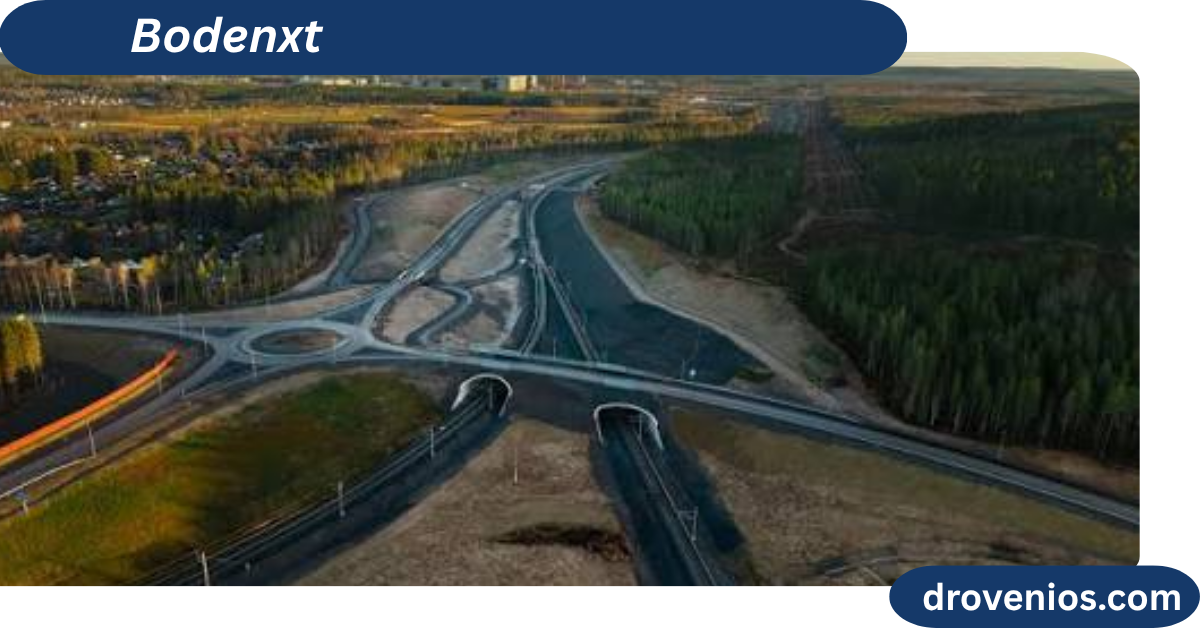
One major example is the railway connection to Boden Industrial Park.
The municipality announced that the railway was completed and officially inaugurated in 2026. The connection links the industrial park with the Malmbanan railway and the wider national rail network.
The municipality has also been working on road connections to the industrial park.
Infrastructure matters because green industry still depends on physical transportation and reliable utilities.
A factory cannot operate efficiently if workers, raw materials, finished products, and essential supplies cannot move efficiently.
Why Infrastructure Matters to the Green Transition
Green development is sometimes discussed mainly in terms of emissions.
However, physical infrastructure is also important.
Rail transportation can help move large amounts of material efficiently. Reliable electricity is essential for energy-intensive industries. Water and wastewater systems must be able to support population and industrial growth.
Boden’s experience demonstrates that sustainability requires more than building a low-carbon factory.
It also requires planning the systems around that factory.
This is one of the more important ideas behind Bodenxt.
Bodenxt and Transportation
Transportation is an important part of Boden’s transformation.
The new railway to Boden Industrial Park is designed to improve access to the industrial area and support heavy transportation. The municipality says the railway was completed ahead of schedule and under budget.
A road connection is also being developed.
The municipality reported that the road section between Highway 97 and Boden Industrial Park was expected to open during the second half of 2026, while another section toward Highway 605 was planned for the second half of 2027. These are planned timelines and can change as construction progresses.
Better transportation can support both industry and the wider community.
It can make the area easier to reach, improve logistics, and create opportunities for additional businesses.
Bodenxt and Green Hydrogen
Green hydrogen is one of the most important technologies connected to Stegra’s Boden project.
Hydrogen can be produced through electrolysis, where electricity is used to split water into hydrogen and oxygen.
When the electricity comes from renewable sources, the resulting hydrogen can be described as green hydrogen.
Stegra’s Boden facility uses alkaline water electrolysis. The company has described a planned hydrogen system with more than 700 MW of capacity and annual production of more than 100,000 tonnes of hydrogen.
In April 2026, Stegra reported that all 37 electrolyzer units had been installed at its green hydrogen plant.
The hydrogen is intended to support the production of green iron.
How Green Hydrogen Can Change Steel Production
Traditional ironmaking commonly uses coal or fossil-fuel-based reducing agents.
Stegra’s process is designed differently.
Green hydrogen reacts with iron ore during direct reduction. The intended main by-product of that reaction is water rather than the large quantities of carbon dioxide associated with traditional coal-based ironmaking.
The resulting direct reduced iron can then be used in steelmaking.
This approach is important because steel is one of the world’s major industrial sources of greenhouse gas emissions.
Reducing emissions from steelmaking could therefore have effects beyond Boden.
However, the success of green steel depends on many factors, including renewable electricity availability, technology performance, financing, construction, transportation, customer demand, and long-term operating conditions.
Bodenxt and the Wider Swedish Green Transition
Boden is not developing in isolation.
Northern Sweden has become an important location for new industrial projects connected to renewable energy and decarbonization.
The region has attracted interest because of factors such as access to renewable electricity, industrial land, existing infrastructure, natural resources, and established industrial knowledge.
Bodenxt is part of this wider regional transformation.
The municipality describes Boden as being located in a region experiencing intensive inward investment and sees the city as part of the global move toward more sustainable societies.
Also read:Messagenal: A Complete Guide to Clear and Meaningful Digital Communication
This helps explain why Bodenxt has become a useful term for understanding the local development process.
Bodenxt and Jobs
Job creation is one of the most direct effects of major industrial investment.
New jobs can appear inside the main industrial project, but employment can also grow in supporting industries.
Potential areas include engineering, construction, logistics, maintenance, technology, administration, hospitality, retail, education, and professional services.
The municipality has reported that people from different countries have moved to Boden for new employment opportunities.
This creates an important challenge.
A community must make sure that new workers can actually build a life in the area.
Employment alone is not enough.
Workers may also need housing, schools, healthcare, transportation, recreational activities, and social connections.
That is why workforce development and housing appear alongside business and infrastructure in the Bodenxt approach.
Bodenxt and Population Growth
Rapid industrial growth can change the population of a smaller municipality.
New workers may arrive alone at first. Some may later bring spouses, children, or other family members.
This can increase demand for local services.
The Municipality of Boden has reported population growth connected to the ongoing transformation. In late 2025, it reported more than 600 new residents associated with Stegra’s establishment.
Population growth can be positive for a community, but it also requires careful planning.
More people can mean more customers for local businesses and a larger workforce.
At the same time, it can place pressure on housing, transportation, schools, utilities, and public services.
Bodenxt attempts to consider these changes as part of one larger process.
Bodenxt and Housing Challenges
Housing may be one of the most difficult parts of rapid growth.
A new industrial project can begin construction faster than a community can build permanent housing.
Temporary accommodation can help in the short term, especially for construction workers.
However, long-term population growth requires permanent housing.
Boden has already developed temporary accommodation initiatives and new residential projects as part of the transformation.
The municipality’s 2026 reporting also highlighted housing shortages as a serious development issue.
This illustrates an important lesson for other communities considering major industrial investments: economic development and housing policy need to be planned together.
Bodenxt and Social Sustainability
A green transition is not only about reducing carbon emissions.
It also raises questions about whether people can participate in the benefits of economic change.
Social sustainability includes issues such as inclusion, education, community participation, skills, equality, and quality of life.
Boden has explored these questions through the proposed Boden Sustainability Center.
The initiative has been designed as a platform where business, education, civil society, and other organizations can work together on social sustainability and community development.
In June 2026, the municipality reported that the Boden Sustainability Center was moving from the planning stage toward implementation.
This is significant because large industrial projects can change the social structure of a community as well as its economy.
What Makes Bodenxt Different?
One distinctive feature of Bodenxt is its focus on the entire community rather than only one project.
A traditional industrial development plan might concentrate mainly on construction, production, and investment.
Bodenxt takes a wider approach.
It connects industrial development with:
- Housing
- Skills
- Infrastructure
- Business development
- Community services
- Social sustainability
- Population growth
This creates a more complete picture of development.
The municipality has described its governance approach as one that works across administrative boundaries and emphasizes processes rather than isolated departments.
That approach can be useful when one major change affects many parts of a city at once.
Is Bodenxt a Company?
No. Bodenxt should not be confused with a conventional private company.
The official municipal description identifies Bodenxt as a platform for Boden’s green transition.
This distinction is important for people searching for information online.
Some websites may describe Bodenxt as a company, technology platform, or independent commercial project.
For reliable information, readers should look at official Municipality of Boden material when trying to understand what Bodenxt actually means.
The initiative is closely connected to municipal development and the wider industrial transition taking place in Boden.
Is Bodenxt a Software Platform?
Bodenxt is not primarily a software product.
The word “platform” in this context refers to an organizational and development framework.
It brings different areas of community development together.
This is an important distinction because people searching for “Bodenxt” may initially expect to find a website application, software service, or technology company.
Instead, Bodenxt is mainly about how Boden is managing rapid societal and economic transformation.
Why Bodenxt Matters Outside Sweden
Although Bodenxt is focused on one municipality in Sweden, its development model can be interesting to communities elsewhere.
Many regions around the world are trying to attract new clean-energy industries.
These projects can bring major investments, but they can also create challenges.
A community that attracts a battery factory, hydrogen plant, clean-energy facility, data center, or advanced manufacturing project may suddenly need more workers, housing, transportation, electricity, water, and public services.
Bodenxt demonstrates one possible way of thinking about this problem.
The central lesson is that industrial development and community development should not be treated as completely separate activities.
Lessons Other Communities Can Learn From Bodenxt
Several practical lessons can be identified from Boden’s experience.
First, communities can plan infrastructure early.
Second, workforce development can be treated as part of economic development rather than as a separate education issue.
Third, housing needs can be considered before population growth becomes a serious problem.
Fourth, local businesses can be included in the growth strategy.
Fifth, social sustainability can be considered alongside environmental sustainability.
These are not guarantees of success, but they provide useful planning principles for communities facing rapid change.
Potential Benefits of the Bodenxt Approach
Bodenxt may provide several potential benefits for Boden.
One is better coordination.
When multiple municipal departments and external organizations work on related challenges, a shared framework can make it easier to identify connections between projects.
Another potential benefit is faster response.
Rapid industrial investment can create problems that cannot wait for traditional long-term planning cycles.
A third benefit is the possibility of more balanced development.
If housing, jobs, infrastructure, and business opportunities are planned together, growth can potentially become more integrated.
The actual results, however, will depend on how projects are implemented over time.
Challenges Facing Bodenxt
Large transformations also create risks and challenges.
Housing pressure is one example.
If new residents arrive faster than homes can be built, housing costs and availability can become difficult issues.
Workforce shortages are another challenge.
Also read:gd7 playz.blogspot/2025/03/rbs.html: Complete Guide, Meaning, Safety, and What Users Should Know
A region may have many new jobs but not enough people with the necessary technical skills.
Infrastructure can also become a bottleneck.
Roads, railways, water systems, electricity networks, and wastewater facilities must expand as demand increases.
There are also environmental considerations.
Green industrial projects are designed to reduce emissions, but they still require land, energy, water, transportation, and other resources.
Responsible planning therefore requires looking at both climate benefits and local environmental impacts.
Financing and the Future of Stegra
The future of Boden’s transformation is closely connected to the progress of major industrial investments.
In April 2026, Stegra announced an agreement in principle for approximately €1.4 billion in new financing. The financing was led by Wallenberg Investments together with other investors and was intended to support completion of the green steel facility in Boden.
The Municipality of Boden described the financing as an important signal for the continued green transition and said the funds would support completion of Stegra’s facility.
This is relevant to Bodenxt because the municipality’s broader transformation is connected to the scale and timing of industrial investment.
As with any major construction project, future progress can depend on financing, engineering, permits, supply chains, construction schedules, market conditions, and other factors.
Recent Development in Boden
Boden’s transformation continued through 2026.
The municipality reported several developments connected to Bodenxt, including progress on infrastructure, workforce development, housing, business activity, and sustainability.
The railway connection to Boden Industrial Park was officially inaugurated in June 2026.
Stegra also reported major construction milestones at its Boden site. These included the completion of the final electrolyzer installation and progress on the direct reduction tower.
In April 2026, Stegra’s Boden project was also recognized by the Swedish Agency for Economic and Regional Growth as a Strategic Net-Zero Project under the EU framework for strategically important net-zero projects.
These developments show that Bodenxt is not simply a long-term concept. It is connected to projects already being developed in the community.
How to Understand Bodenxt From a U.S. Perspective
For U.S. readers, Bodenxt can be understood as a broad regional development approach. Imagine a smaller American city receiving a major clean-energy investment. The city would need to plan for new jobs, housing, transportation, schools, utilities, local businesses, and public services at the same time.
Boden faces many of these same planning challenges. The difference is that Boden operates within Sweden’s own laws, institutions, and planning system, so its approach cannot be directly copied by an American city. However, the basic challenge is similar: large industrial growth can affect almost every part of a local community.
Bodenxt and Digital Information
As Boden’s transformation continues, more information about Bodenxt may appear online. Not every page will provide the same level of detail or accuracy, so readers should consider where information comes from and when it was published.
The Municipality of Boden is an important source for local development, infrastructure, housing, and community planning information. Stegra is the relevant source for information about its own industrial project, including construction updates, technology, financing, and production plans.
Independent websites can also provide useful background. However, claims about costs, dates, production targets, or official decisions should be compared with information from the organizations directly involved.
How to Research Bodenxt Safely
Researching Bodenxt is easier when readers use basic digital literacy skills. Start by checking the publisher and publication date of each article. Then look at whether the information describes something that is planned, proposed, under construction, or already completed.
These terms can have very different meanings. A planned project does not mean construction has started, while a project under construction does not mean it is already operating. The same applies to population estimates, financing announcements, and future production targets.
Checking these details can help readers build a more accurate understanding of Bodenxt and avoid confusing future plans with completed developments.
Bodenxt and the Meaning of Green Transition
The term green transition describes a broad shift toward lower-emission technologies, cleaner energy, and more sustainable ways of producing goods and services. It can include renewable electricity, green hydrogen, industrial decarbonization, electrification, cleaner transportation, and more efficient use of resources.
In Boden, this transition is closely connected to industrial development and green steel. However, the wider transformation also involves housing, infrastructure, businesses, education, and employment.
This is why Bodenxt is broader than a single industrial project. Its purpose is connected to preparing the wider community for the changes that major green industries can bring.
What Could Bodenxt Look Like in the Future?
Bodenxt will continue to change as Boden’s industrial and community development progresses. Continued investment could increase the need for housing, transportation, education, infrastructure, and public services.
The local business environment may also change as new companies enter the region and existing businesses respond to new opportunities. Population and workforce patterns could change as people move to Boden for employment.
At the same time, future development will need to consider environmental and social factors. For this reason, Bodenxt is better understood as an evolving framework rather than a finished project.
Why the Bodenxt Model Is Worth Watching
Bodenxt provides an example of how a community can approach rapid industrial transformation from a wider perspective. Instead of focusing only on a major factory, the approach also considers the people and systems needed to support long-term growth.
Housing, infrastructure, employment, skills, businesses, and public planning all have a role in this process. Boden’s experience may therefore be useful to people studying green industry, regional development, clean energy, and sustainable community planning.
Final Thoughts
Bodenxt is the Municipality of Boden’s platform for managing and supporting the community’s major green transition. It is closely connected to Stegra’s green steel investment, but it is much broader than the steel plant itself.
The initiative covers important areas such as skills supply, housing, business development, and infrastructure. Recent developments in Boden show how quickly the transformation is progressing, with new railway infrastructure, workforce programs, housing activity, sustainability initiatives, and major industrial construction all forming part of the wider picture.
For anyone interested in green industry, sustainable cities, clean hydrogen, green steel, regional economic development, or community planning, Bodenxt provides a useful case study.
Its long-term importance will depend on how successfully Boden balances industrial growth with housing, infrastructure, environmental responsibility, workforce needs, and quality of life. The transformation is still developing, so future results will become clearer as major projects move from construction into operation.
Frequently Asked Questions About Bodenxt
Is Bodenxt the same as Stegra?
No. Bodenxt and Stegra are different. Bodenxt is the Municipality of Boden’s broader development platform for managing the community’s green transition. Stegra is the company developing a major green steel facility in Boden.
Where is Bodenxt located?
Bodenxt is associated with Boden Municipality in northern Sweden. Boden is located in Norrbotten County and is part of the broader industrial transformation taking place in northern Sweden.
Does Bodenxt only focus on green steel?
No. Green steel and Stegra’s establishment are major drivers of the transformation, but Bodenxt covers a much wider range of community development issues. These include housing, skills, business development, infrastructure, and social sustainability.
Why is housing important to Bodenxt?
Housing is important because new industrial jobs can attract workers and families to the area. If population growth happens faster than housing construction, a shortage can develop. Boden has already reported significant housing pressure during its current transformation.
Why is Boden important to the green industrial transition?
Boden has become an important location for green industrial development because of its position in northern Sweden and its connection to renewable energy, transportation infrastructure, industrial development, and major projects such as Stegra’s green steel facility. The municipality considers Boden part of the wider transition toward more sustainable societies.